
Your Cart is Empty
Pee Pads vs Outside: Which Is Right for My Dog?
Short answer
TL;DR
- Outside is the long-term goal: one clear rule, no confusion, plus exercise and stimulation.
- Always go potty immediately after waking, eating, drinking, and playing.
- Use the same potty spot, the same door, and the same cue every time.
- Most puppies learn the routine in about a week; full potty training takes several weeks.
Main content
Pee pads vs outside: quick comparison
|
|
Pee pads |
Outside |
|---|---|---|
|
Best for |
High rise apartment or no yard, tiny puppies under 16 weeks, unvaccinated pups, senior dogs and mobility issues, bad weather, overnight |
Homes with a yard or a dog door, easy street access, milder climates |
|
Main advantage |
Convenience, easy cleanup, always available, localized mess |
One clear bathroom rule, no confusion, plus mental and physical stimulation |
|
Main drawback |
Can confuse dogs about where to go; risk of dependency on indoor pottying |
Needs frequent trips every one to two hours early on; hard in colder climates |
|
Effort |
Lower per potty break; you handle the pad |
Frequent trips, a leash, and poo bags — but no cleanup indoors |
|
Long term |
Usually needs a transition outdoors later |
The final destination; no transition needed |
When outdoor potty training is the better choice
Outdoor potty training is ideal for homes with a yard. It teaches your dog a single, clear rule — the bathroom is outside, full stop — which eliminates confusion about where they're allowed to go. Going outdoors also gives your dog mental and physical stimulation that a pad inside can't: New smells, a walk, and time on the grass.
The trade-off is effort. Outdoor training requires frequent trips, roughly every one to two hours in the beginning, and that's harder in colder climates or if you can't get downstairs quickly. If you have a yard or a dog door, that cost is low and outside is the obvious call.
When pee pads are the better choice
Pee pads are a useful tool, not a shortcut. They're the practical answer when outdoor trips aren't realistic:
-
High rise apartment living. No yard and a long trip downstairs make frequent potty breaks impractical, especially at night.
-
Puppies under 16 weeks. Tiny puppies have tiny bladders and almost no bladder control, so they need more frequent potty breaks than most owners can manage outdoors.
-
Unvaccinated puppies. Before your pup is fully vaccinated, keeping them off public ground is a real safety consideration.
-
Senior dogs and mobility issues. An older dog who can't make it outside in time needs a designated potty area indoors.
-
Bad weather and overnight. Pads give a comfortable bathroom option in extreme weather and cover the hours you can't be up.
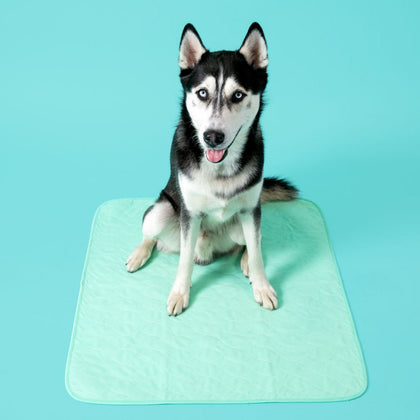
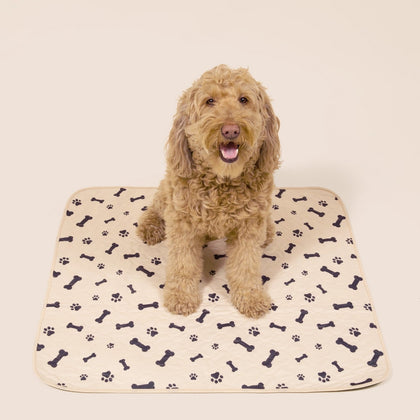
Pads also make cleanup easy and keep the mess in one place. Look for washable pads with a leak proof backing and good odor control, and keep them in the same spot — consistent placement is what makes potty pad training work.
The downsides of potty pad training
Be aware of the trade-offs before you commit to pad training.
-
Location confusion. Pads teach your dog that going indoors is acceptable, which can blur the rule about where the appropriate place actually if they are not trained to use them properly.
-
Texture confusion. Many dogs generalize a pad to anything that looks or feels similar — a bath mat, a rug, a doormat.
-
Dependency. The longer a dog is pad trained, the more they can come to rely on indoor pottying, and the harder the eventual move outside becomes.
None of this makes pads a bad choice — it makes them a scoped one. If you can get outside easily, going straight outdoors skips this whole category of problem.
Puppy pads, pee pads, potty pads — what's the difference?
Nothing. "Puppy pads," "puppy pee pads," "potty pads," and "training pads" all describe the same product: an absorbent pad that gives your dog a designated potty area indoors. Disposable and washable versions both exist. Related indoor options include a dog litter box for small breeds and fake turf trays, which some owners prefer because the surface feels closer to grass and makes the later switch to outdoor toilet training easier.
Using both: pads for a new puppy, outdoors later
Most owners with a new puppy don't pick a side — they use pads to jumpstart potty training in the first few weeks, then transition outdoors once the pup is older and fully vaccinated. Pads prevent accidents while bladder control develops; outdoors becomes the destination.
Transitioning can be challenging and it's a long process, so plan for it:
-
Move the pad a little closer to the door each day.
-
Place the pad just outside the door, then on the grass.
-
Use a consistent cue word like "go potty" outdoors.
-
Reward outdoor successes heavily, right on the spot.
-
Remove the pad once your dog is going outside reliably.
Take it slowly — a rushed switch causes accidents. See our full guide on using puppy pads and outdoor potty training together for the step-by-step version.
If this is your first puppy
The most common first-puppy mistake is switching methods every few days. Pick the approach that fits your living situation, then stay with it — every family member using the same door, the same potty spot, and the same cue word. A consistentpotty routine is always the best option.
Expect puppy potty training to take weeks, not days. Treat the potty training process as a habit you're building rather than a switch you flip, and set up the dog potty area — pad or outdoor spot — before your puppy comes home so you're not improvising on day one.
What both methods need: Close supervision
Whichever you choose, close supervision is what makes potty training work. In the early days, keep your puppy behind a gate or in a crate when you can't watch — dogs avoid soiling their sleeping area, so a crate helps prevent accidents. Watch for the telltale signs your dog needs to go: sniffing the ground, circling, or heading for the door. Get them to the pad or outside the moment you see one.
Close supervision is the single biggest predictor of successful potty training, and it matters far more than which method you picked. Neither pads nor outdoors trains a dog on its own — supervision, timing, and rewards do.
Reward good behavior immediately
Reward good behavior the instant your dog finishes in the correct place — praise and a treat, before you head back in. Immediate reward is what builds the habit, on a pad or on the grass. Never punish accidents; that teaches your dog to hide where they go instead of using the right spot.
Related FAQ
Do pee pads ruin outdoor potty training?
Can I use a pee pad and go outside at the same time?
Can an older dog switch from pads to outside?
When should I call my vet?
Related products
Was this article helpful?
Still need help?
Contact the Potty Buddy support team and we will help you find the right answer.
support@pottybuddy.co