
Your Cart is Empty
How Do I Potty Train My Dog When I Work All Day?
Short answer
TL;DR
- Set up a pen or gated area with a pad zone separate from bed, food, and water.
- Young puppies (under ~4–6 months) can't hold it all day — add a midday break or dog walker.
- Choose multi-layered, leak-proof pads and secure them so they can't be shredded.
- Pads are a bridge, not a permanent fix — reward outdoor potties and reduce pads as your dog matures.
Main content
Can I potty train my dog if I work all day?
Yes — with the right setup. Indoor pads let your puppy relieve themselves immediately when they can't get outside, which is exactly what long work hours require, and they simplify cleanup compared to uncontained accidents on carpets. Pads also help during inclement weather when outdoor access is limited. The honest caveat: a young puppy genuinely can't be left eight hours with no break, so pads work best alongside a midday potty break or dog walker while you build the routine. Used this way, pads are a useful tool for working owners, not a shortcut around training.
Using puppy pads while at work: how to set up the space
Correctly setting up your puppy's space is what minimizes accidents and reinforces training. Build one safe, confined area and stock it before you leave.
-
Contain the space. Use an exercise pen (x pen) or baby gates to keep your puppy in one easy-to-clean area, not loose in the house.
-
Create a pad zone. Place puppy pads in a designated spot, away from your puppy's bed, food, and water — dogs avoid soiling where they sleep and eat.
-
Keep the crate for resting. Use the crate as the sleeping spot inside or beside the pen, with the pads out in the larger play area.
-
Add the essentials. The pen should contain pads, a bed, water, and a few toys so your puppy stays comfortable and occupied.
-
Secure the pads. Fasten the pads in a holder or tray so your puppy can't shred or chew them while you're gone.
How long can my puppy hold it during the workday?
Not as long as a workday, if they're young. Puppies under 12 weeks essentially cannot hold their bladder, and puppies under four to six months can't hold it for more than a few hours — a rough guide is about one hour per month of age. Quality pads can absorb urine for up to 16 hours, which protects your floors, but absorbency is not the same as bladder control: a puppy left too long will still be uncomfortable and may start having accidents elsewhere. This is why a midday break matters most in the first months.
Where should I place the puppy pee pads?
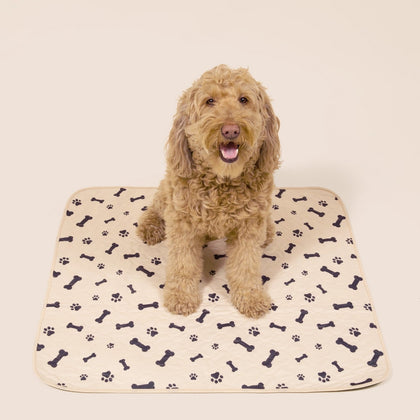
Put the puppy pee pads in a consistent, designated spot inside the pen, well away from the bed, food, and water bowls. Consistency is crucial — moving pads around confuses your puppy and undoes progress. Pads are portable, so if you need coverage in more than one area you can add a second pad, but keep each location fixed. A designated spot gives your dog a clear place to relieve themselves every time. If you need to use pads for protecting your surfaces like carpets, sofas or dog beds, its best to use a pad with a different pattern or color so the puppy does not confuse it with the potty spot.
How do I choose potty pads for all-day absorbency?
For long hours, not all dog potty pads are equal — absorbency and containment matter most. Choose potty pads with multiple layers for better absorbency, a leak-proof backing to protect your floors from urine damage, and enough size for your dog. Multiple layers and a good core let quality pads hold up to 16 hours while controlling odor. Washable pads with a leak-proof backing work well for daily use and cut down on waste and long-term cost.
How do I keep potty training consistent while I'm gone?
Consistency is what makes pad training work and prevents confusion. Keep the pad in the same spot, run the same routine every day, and clean soiled pads promptly — immediate cleanup prevents behavioral issues and keeps your puppy using the pad rather than seeking a fresh surface. When you're home, take your puppy to the pad or outside on a leash on schedule and reward every success with praise and treats right away. Never punish accidents; calm cleanup and positive reinforcement teach far faster.
Do puppy pads slow down potty training?
They can, and it's worth being honest about it. Unless your circumstances do not allow for easy outdoor access (for example apartment living, immobility, or other reasons), puppy pads should not be a long-term solution: leaning on them can hinder full house training, because a dog may come to treat indoor elimination as acceptable and have accidents on carpets or other mats. Pads can also make outdoor potty training more complicated by sending mixed signals, and they can extend the timeline to full outdoor elimination. The fix is a plan — reward pottying in the outdoor area whenever you're home so outside becomes the preferred spot over time, and gradually reduce pads as your dog reliably uses the designated spot and matures.
Do I also need a dog walker or a midday break?
For a young puppy, ideally yes. A pee pad covers the hours you truly can't be there, but a midday potty break — from a dog walker, a neighbor, or a family member — gives your puppy a chance to relieve themselves and breaks up a long absence. As your dog gets older and gains bladder control, you can lean less on the midday visit. A senior dog, or a dog who's sick, may also need more frequent breaks, so adjust to the individual rather than the clock.
Related FAQ
My puppy shreds the pad while I'm gone. What do I do?
Can I do this in an apartment?
When should I call my vet?
Related products
Was this article helpful?
Still need help?
Contact the Potty Buddy support team and we will help you find the right answer.
support@pottybuddy.co