
Your Cart is Empty
How Do I Get My Dog to Poop on the Pad, Not Just Pee?
Short answer
TL;DR
- Lead your dog to the pad at poop times — after meals and after waking.
- Watch for pre-poop signs: sniffing, circling, pacing.
- Reward the poop immediately — many owners reward pee well but forget the poop.
- Keep a clean pad and enough room; dogs often won't poop on a soiled or cramped pad.
Main content
Why does my dog pee on pee pads but not poop on them?
In some circumstances such as apartment living or immobility, having an indoor potty spot is a necessity. Getting a dog to poop on a pad is not always easy - for several reasons, and none of them are defiance. Some dogs won't poop on pee pads that are already soiled with urine, so a used pad puts them off. Others need to circle and take a few steps before they poop and feel cramped on a small pad. And pooping happens on a tighter schedule than peeing, so it's easy to miss the window and have your dog go elsewhere. Fixing those three things — a clean pad, more room, and better timing — solves most cases.
How to train your dog to poop on the pad
Here's a common routine that can get your dog to poop onto the pad.
-
Learn your dog's poop schedule. Most dogs poop shortly after meals and after waking — monitor for a few days to find their pattern.
-
Get them on the pad at those times. Lead your dog to the pad right after eating and after naps, on a leash if needed, and give them a minute.
-
Watch for the signs. Sniffing the ground, circling, or pacing means it's coming — guide them onto the pad calmly.
-
Use a cue and reward the poop. Say your cue as they start, and the instant they finish, reward with a treat and praise.
-
Keep the pad clean and roomy. Swap in a fresh pad and leave enough space to circle so nothing puts them off.
How do I get my dog to use the pad for poop specifically?
Make the potty pad the most appealing and accessible option for pooping. Confine your dog to a small area with the pad — or a crate for resting nearby — so there's no better spot to choose, or keep them on a leash so you can steer them to it. Take your dog to the pad frequently, and if they're new to it, introduce the pad calmly — a dog that has never been shown the pad simply won't know it's the right place. The more consistently poop happens on the pad, the faster it becomes the default.
Set a consistent routine and use a consistent phrase
A consistent routine builds the habit faster than anything else. Feed at the same times each day so poop times stay predictable, and take your dog to the pad after every meal and nap. Pair each attempt with a consistent phrase, or verbal cue, like "go potty" — dogs can learn to go on cue, but only if the phrase is the same every time. Skipping the cue, or changing it, slows progress. Consistency like this is the core of successful potty training.
Reward good behavior the instant your dog poops on the pad
Reward good behavior immediately — the moment your dog finishes pooping on the pad, not once you've walked away. A small treat plus praise tells your dog exactly what earned it. Many owners reward peeing well but forget to reward pooping, so the poop habit lags behind; treat both the same. Positive reinforcement is what makes your dog associate the pad with something good, and consistent praise leads to quicker success.
Give your dog room and swap in fresh dog pee pads
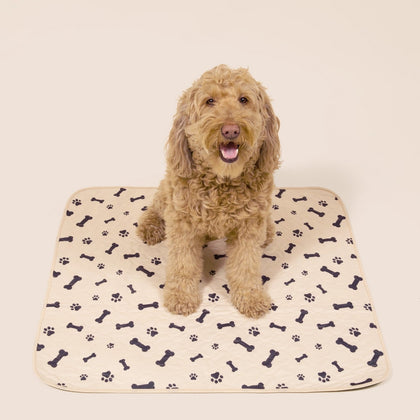
Two physical fixes solve a lot of poop problems. First, give your dog room: many dogs circle and step around before they poop, so a larger pad or two dog pee pads side by side gives them space. Second, keep the surface fresh — replace a soiled pad immediately, whether you use washable or disposable pads, because dogs often refuse to poop where they've already peed, and leftover smell can send them to a cleaner spot on the floor instead.
What to do when accidents happen
Accidents happen, and they're usually beyond your dog's control, not defiance. If you catch your dog in the act, calmly redirect them to the pad — don't scare or scold them. Clean any mess thoroughly with an enzymatic cleaner to remove the scent, since leftover odor pulls your dog back to the same wrong spot. Never punish accidents: punishment creates fear and confusion and makes training slower, not faster.
Poop pad training for a new puppy or adult dog
A new puppy needs frequent chances to go — every one to two hours, plus after meals, naps, and play — because they can't hold it long and miss the pad easily. An adult dog usually learns faster: most adult dogs potty train within a few weeks once the routine is consistent. In both cases the method is the same; the puppy just needs more trips and closer supervision.
What if my dog is an older dog or already house trained?
An older dog can learn to use pads in about one to three weeks, and some senior dogs need pads for mobility issues or incontinence rather than a training gap. If your dog is already house trained to go outside and you're adding pad use, introduce the pad calmly, take them to it after meals and naps, and supervise closely so they connect the pad with pooping. Patience matters most with a recently adopted or senior dog.
Common pad training mistakes
-
No consistent cue. Not using a consistent potty phrase slows everything down.
-
Missing the poop window. Too few trips to the pad after meals and naps means accidents.
-
Ignoring body language. Sniffing and circling are your signal — act on them.
-
Rewarding too late, or only for pee. Reward the poop immediately, every time.
-
Punishing accidents. Creates fear and confusion; redirect calmly instead.
-
Leaving a soiled pad down. Many dogs won't poop on it — swap it out.
How long does pee pad training take?
For most dogs, pee pad training takes about one to three weeks of consistent practice, though the poop half can lag the pee half if you're not rewarding it as deliberately. Puppies take a little longer because of frequent accidents; adult and older dogs often pick it up faster. Stay consistent and patient — the habit sticks once poop reliably happens on the pad.
Related FAQ
My dog holds their poop instead of going on the pad. Why?
Can I train my dog to poop on the pad but pee outside, or the reverse?
When should I call my vet?
Related products
Was this article helpful?
Still need help?
Contact the Potty Buddy support team and we will help you find the right answer.
support@pottybuddy.co