Your Cart is Empty


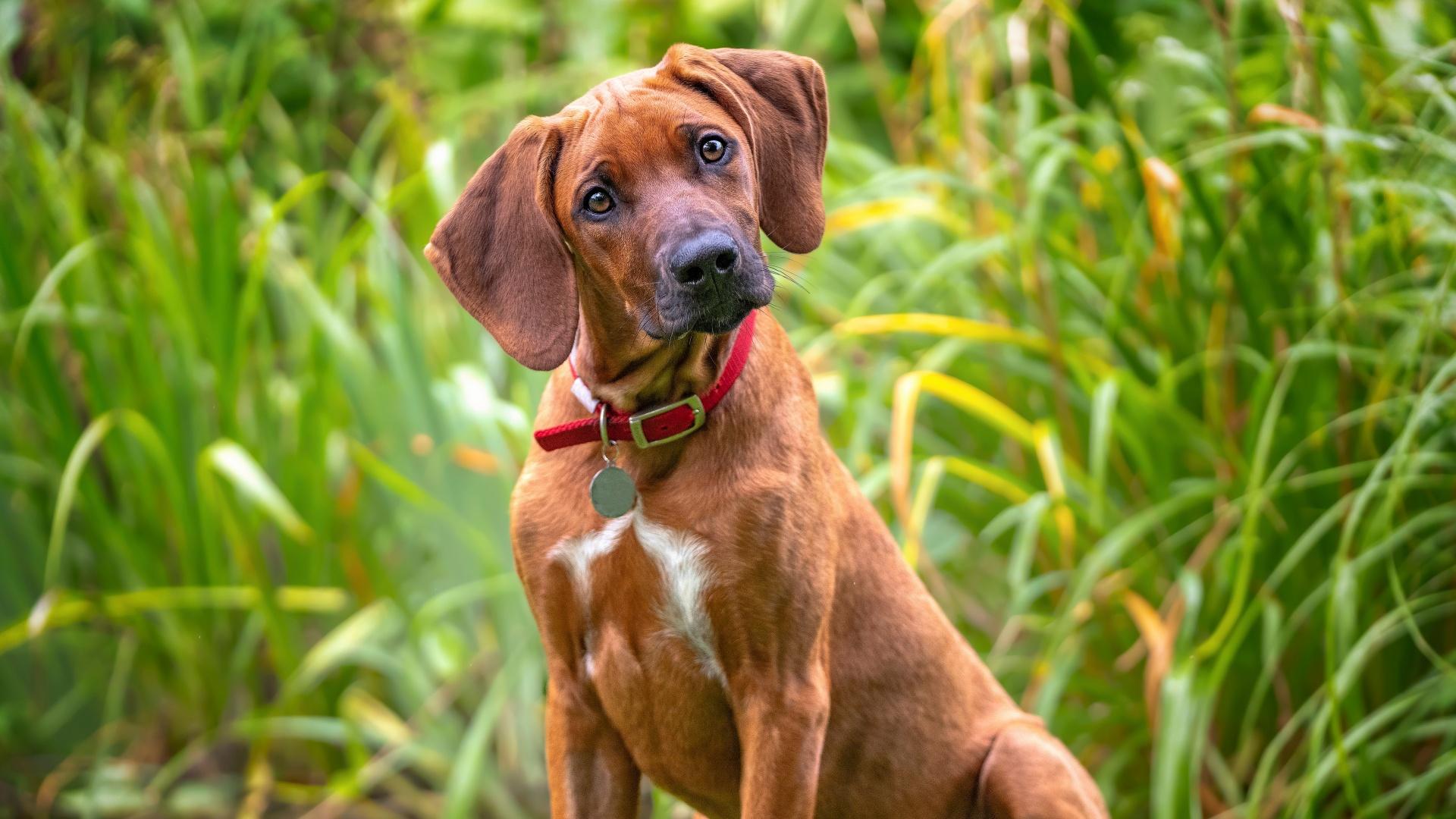
I think we can all agree that the sudden wide-eyed, head tilt of a dog is one of their most attractive and endearing features. A short-lasting head tilt that has an obvious cause is of no concern and is something that all dogs do from time to time. However, some head tilts will require veterinary attention.
Head tilts that are persistent, occur for no clear reason or that are accompanied by other symptoms are usually going to need to be investigated. This article explores the most common causes, such as ear infections, balance disorders and behavioral problems. We discuss how to identify when there is an issue and outline the most effective therapy options.
Your dog’s adorable head tilt is usually just a way of them trying to understand the world around them or to listen to something a bit more intently. However, when it does signal an issue, there are clear steps you can take to address things promptly.
⚠️ Medical Disclaimer: This article is informational only and should not replace professional veterinary advice, diagnosis, or treatment. Always consult your veterinarian before starting any treatment or medication for your dog. Only a qualified veterinary professional can properly diagnose your pet's condition and recommend appropriate treatment based on individual circumstances.
Why Do Dogs Tilt Their Heads? Understanding the Main Reasons
Why Do We Reward This Behavior? The Role of Positive Reinforcement
Head Tilting in Specific Situations: Why Does My Dog Tilt Their Head When...?
When Head Tilting Is Normal vs. Concerning
Signs That Head Tilting Might Indicate a Medical Problem
Common Medical Causes of Head Tilting
This classic canine behavior can have a number of causes that are not medical. It can be linked to their hearing or vision. It can also be a way of them communicating with you or another dog. For others, it is a learned behavior, that they’ve understood it can earn them something- like a treat or words of praise.
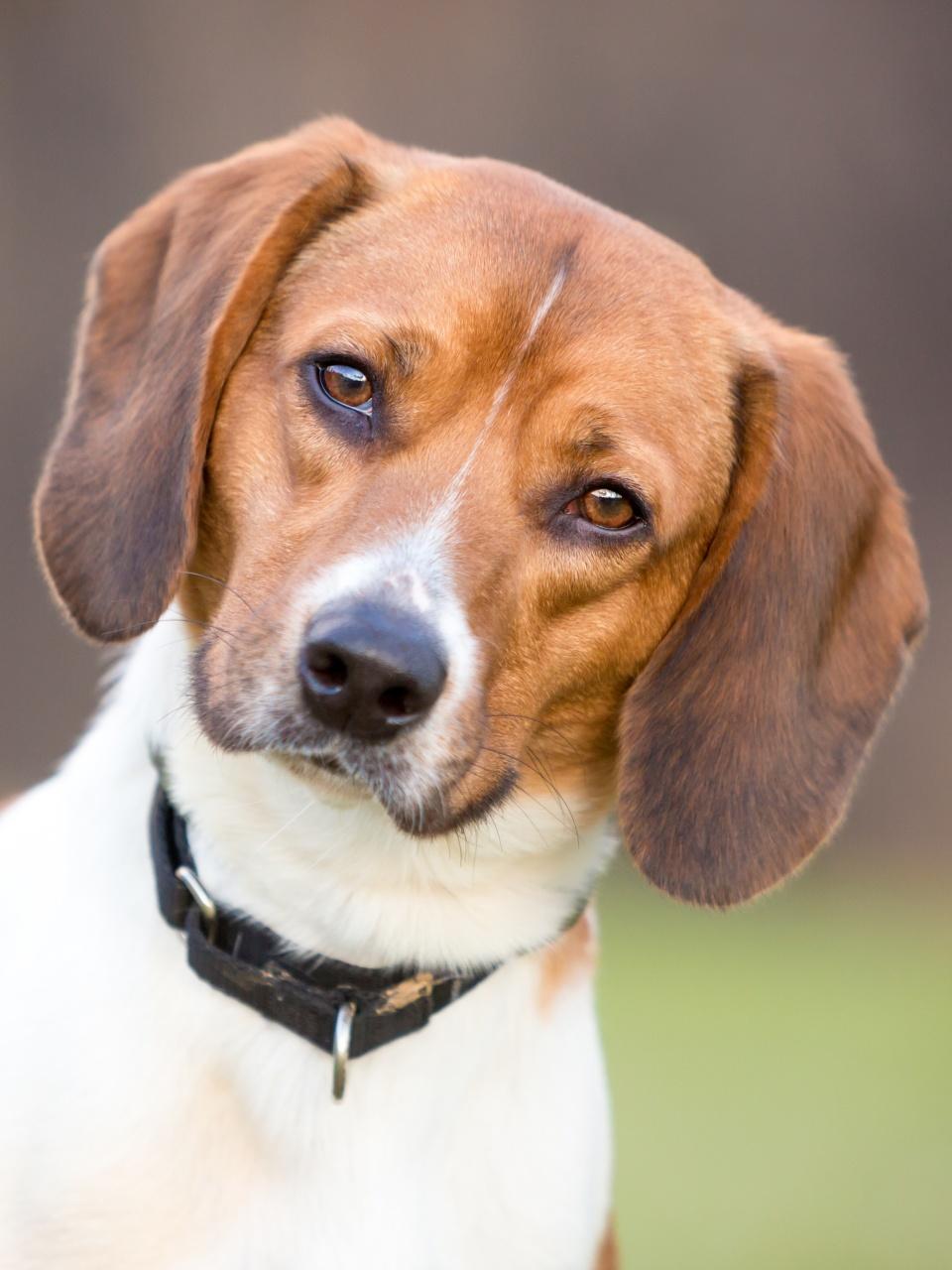
Did you know, dogs can hear frequencies that are out of the range of human hearing? Their hearing is impressive! However, they are not so good at locating where the sounds come from. This is especially true for heavy eared breeds like Beagles and Spaniels, whose ear flaps may obstruct the sounds around them.
Tilting is a way for them to compensate for their below-par sound locating ability. The theory is that their brain tries to determine which ear detects the sound first. If the right ear picks up the noise a few nanoseconds before the left, the dog knows that the sound came from the right of them. The greater distance between the ears, especially when one is above the other, the easier this is for them to figure out. This is called ‘ear-timing differences’.
You may notice if your dog detects an unexpected noise outside, like a child calling out, they instinctively tilt their head. They’re trying to hone in on where that noise originates from.
While this is less commonly discussed and seems to be a less obvious purpose of dog head tilting, there is also a visual aspect at play.
For longer nosed breeds, like an Afghan hound or Greyhound, their long snout can get in the way when they are trying to see something in front of them. If your face, for example, is looking right at them, they may be better able to focus on you and your expression if they tilt their head a little, to move that long muzzle out of the way. It is like trying to look at someone right in front of you, but a pole is blocking the way!
Interestingly, there has also been some research in primates which found that assessing something at a slight angle can make it easier for the brain’s visual cortex to study and perceive. This is especially the case for detecting facial expressions and tracking eye movement.
It makes sense that shorter-nosed breeds (such as the Shih Tzu or Pug) will tilt their head to a lesser extent, as they have less nose to move out of their way.
You may also notice your puppy tilting their head dramatically. These little ones are still learning how to read expressions and are teaching their brains to understand depth perception.
Have you ever noticed that some people stick their tongue out while concentrating? Well a dog’s head tilt may be the equivalent of this. It can be a signal that they are thinking harder, and trying to figure something out.
There are some gifted dogs out there who have learned a vast quantity of words and their meanings. I’ve met one who was a border collie- and quite the character she was! She definitely tilted her head a lot. Apparently, these ‘gifted learner’dogs' heads tilt more when they are hearing familiar words. Perhaps you’ve noticed your dog's head tilting when they hear a word they know- like ‘walkies’ or ‘dinner!’?
Much like humans, a dog’s brain is split into two hemispheres. Each side specializes in different things. It is thought that a dog may tilt to one side as a way to focus on one hemisphere- the one best suited to the task at hand.
Some dogs use the head tilt as a way to focus in on something. This is akin to a human nodding along when in a conversation. They are tuned in and filtering out any distractions around them.
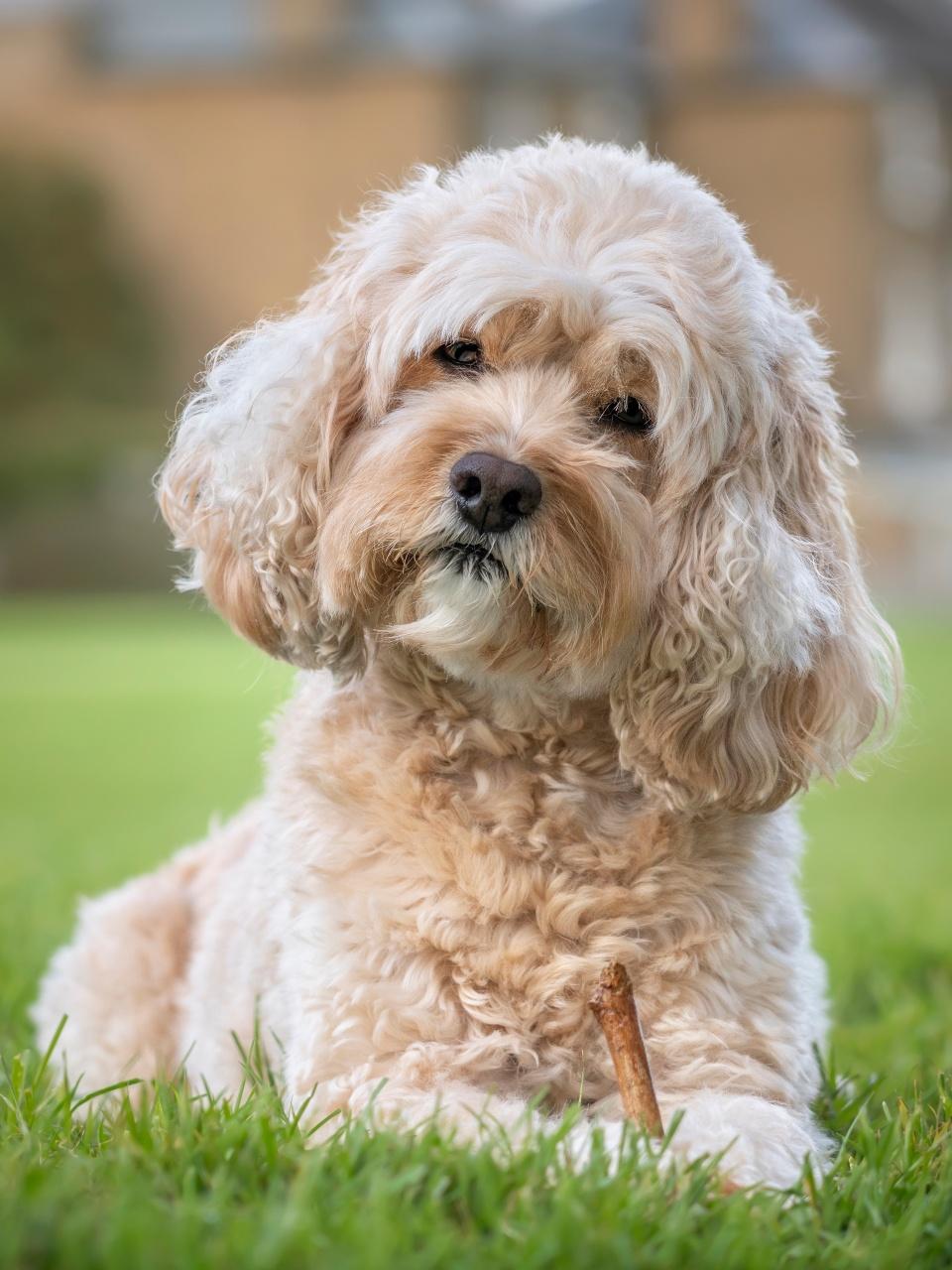
While we may spend a lot of time trying to communicate efficiently with our dogs, it may surprise you to learn that many canines do the same thing. Why do dogs tilt their head when we speak? Sociable dogs will listen to people, enjoy this ‘chat’, and can head tilt toshow their engagement. It is a visible cue that they are interested in what you are saying and it can be a way for them to prolong the interaction.
As well as the head tilt, your dog might be giving off other subtle cues that they are paying attention, including:
Focused eyes
Ears that twitch forward
A body pointed in your direction
So, if you start talking and your pet tilts their head, take this as a clear sign thatthey are listening with intention.
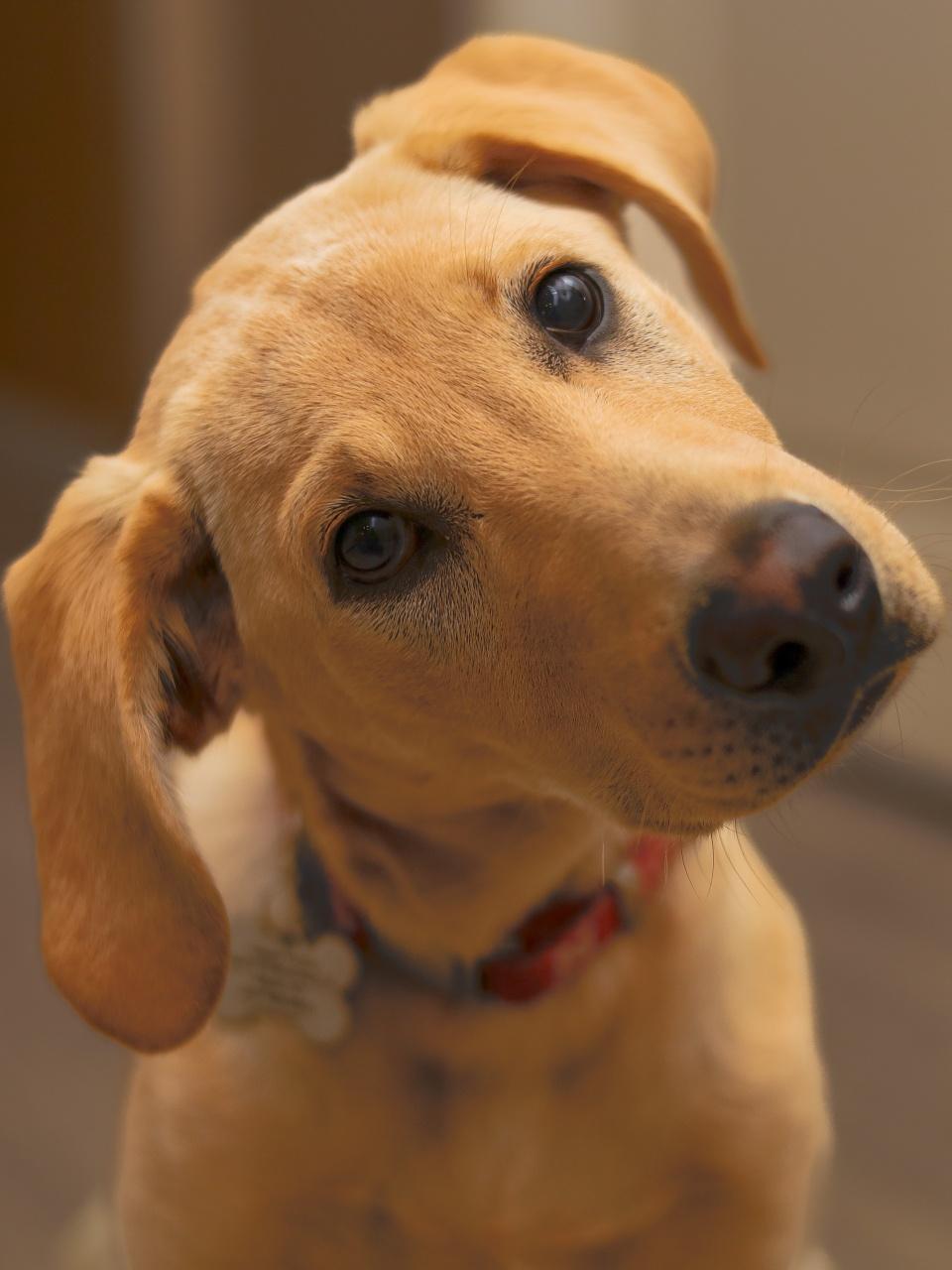
You’ve probably positively reinforced a head tilt without even realising it. As soon as a dog tilts their head, many of us will instinctively offer verbal praise, and let them know just how sweet and cute they are being. We are more likely to show them positive attention and to give them a pat or treat- all sorts of offerings that they will happily lap up!
The more times this interaction happens, the more your dog realises it is in their favor to tilt their head when in your company. Over time, you may even notice that your dog's head tilts with the simple intention that they are hoping to get a reward of some kind.
Think of the feedback loop: Cute behavior (head tilt) -> Praise from their beloved owner -> Another head tilt -> Yet more praise. This sort of cycle is seen more in dogs that are sociable and amenable to training, including breeds like Labradors, Retrievers and Bichon Frises.
When you’re right in front of your dog and talking, they are not trying to figure out where the noise is coming from. More likely, they’re assessing your tone and facial expression, and are trying to get a clearer read on the situation. They’ll also be paying more attention, and focusing their mind.
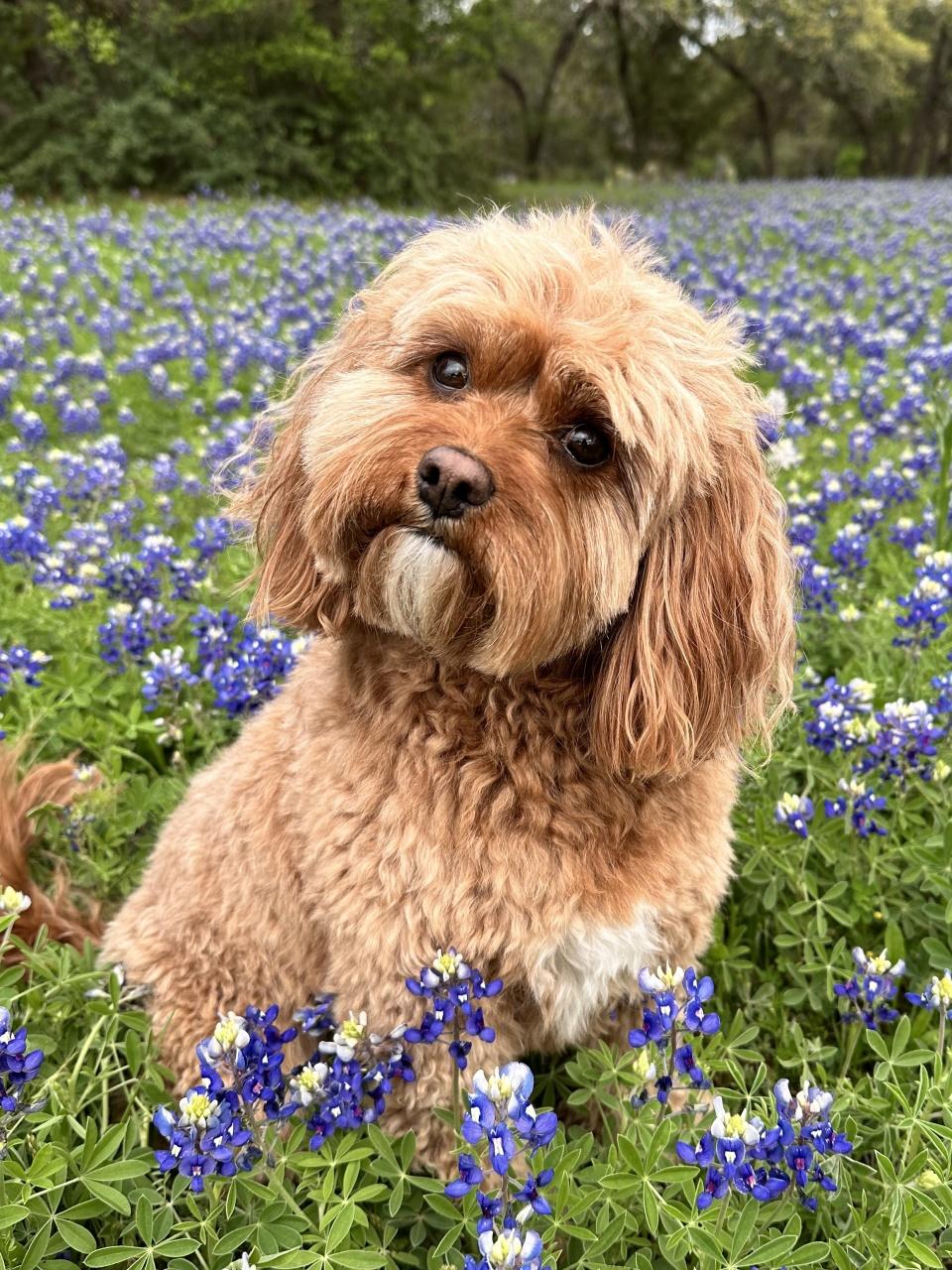
If a situation is a bit unclear, a quick head tilt is a nice way for dogs to gain a little more control and to get some thinking space. In essence, they are trying to think a little harder and to figure something out. This is commonly seen when they hear a strange noise, like an unexpected voice from another room.
Most of us will have tried to reproduce this head tilt in our own dog, as it is something they do so reliably. A high squeak from our lips or a press of a squeaky toy, and that head is likely to tilt! This is probably them engaging in what is happening, but also taking a beat to locate the exact source of the noise and to process exactly what it is. This behavior is especially obvious in puppies.
The goal of a head tilt in this scenario is to get a good look at your face and to read what your expression might be saying. They also find it easier to focus on the tone in your voice.
Of course, as well as this, they are letting you know that they are giving you their full attention and are very interested in what you are saying.
Some dog breeds head tilt much more regularly and in a more extreme manner than others. This will be determined by their facial shape and ear placement, but also by how sociable they are and how engaged in training.
The short-faced Pug tilts less than the German Shepherd. Similarly, the heavy-eared Cocker Spaniel is more likely to head tilt than a Jack Russell.
All dogs' heads tilt from time to time. This is usually a clear response to something like a high-pitched sound or a word that takes their fancy.
A persistent or unexplained head tilt is a red flag. This is especially true when there are other symptoms, like dizziness, flickering eyes, or ear scratching.
The following are red flags, and indicate that veterinary attention is needed:
A new, sudden onset and persistent head tilt lasting more than a few minutes
Accompanied by disorientation or circling
Balance issues, stumbling, or falling
Nystagmus (rapid eye movements)
Vomiting or loss of appetite
Excessive drooling or head shaking
Scratching and rubbing at the ears
Discharge or a bad smell from ears
Lethargy
Hearing changes or apparent deafness
Pain response when ears are touched
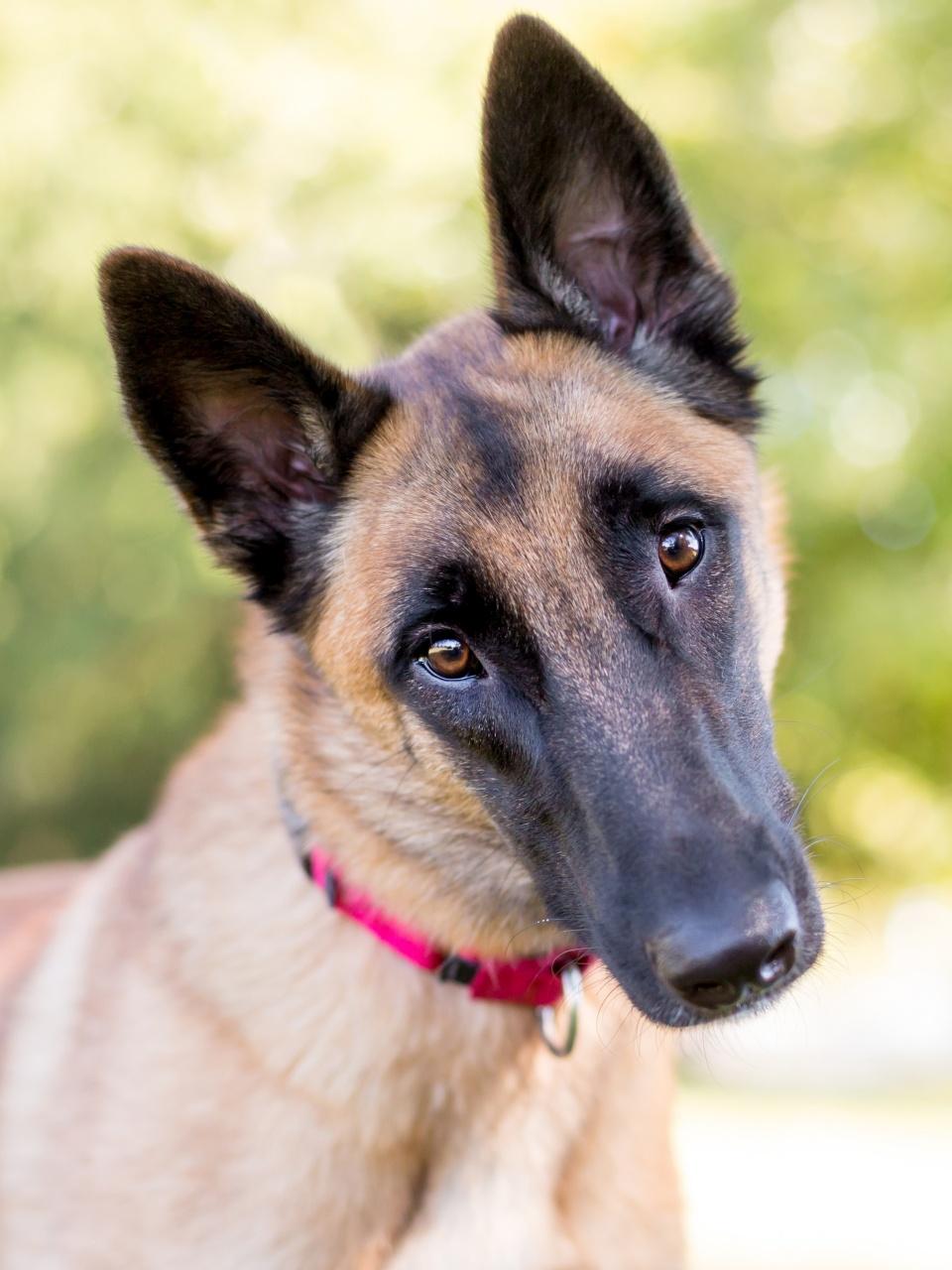


In veterinary practice, when an older dog presents with a sudden and unexplained head tilt, we will be considering Idiopathic Vestibular Disease. Additional signs include dizziness, nausea and eye flickering. We describe these dogs as being like ‘drunken sailors’. These patients generally recover within a few weeks.
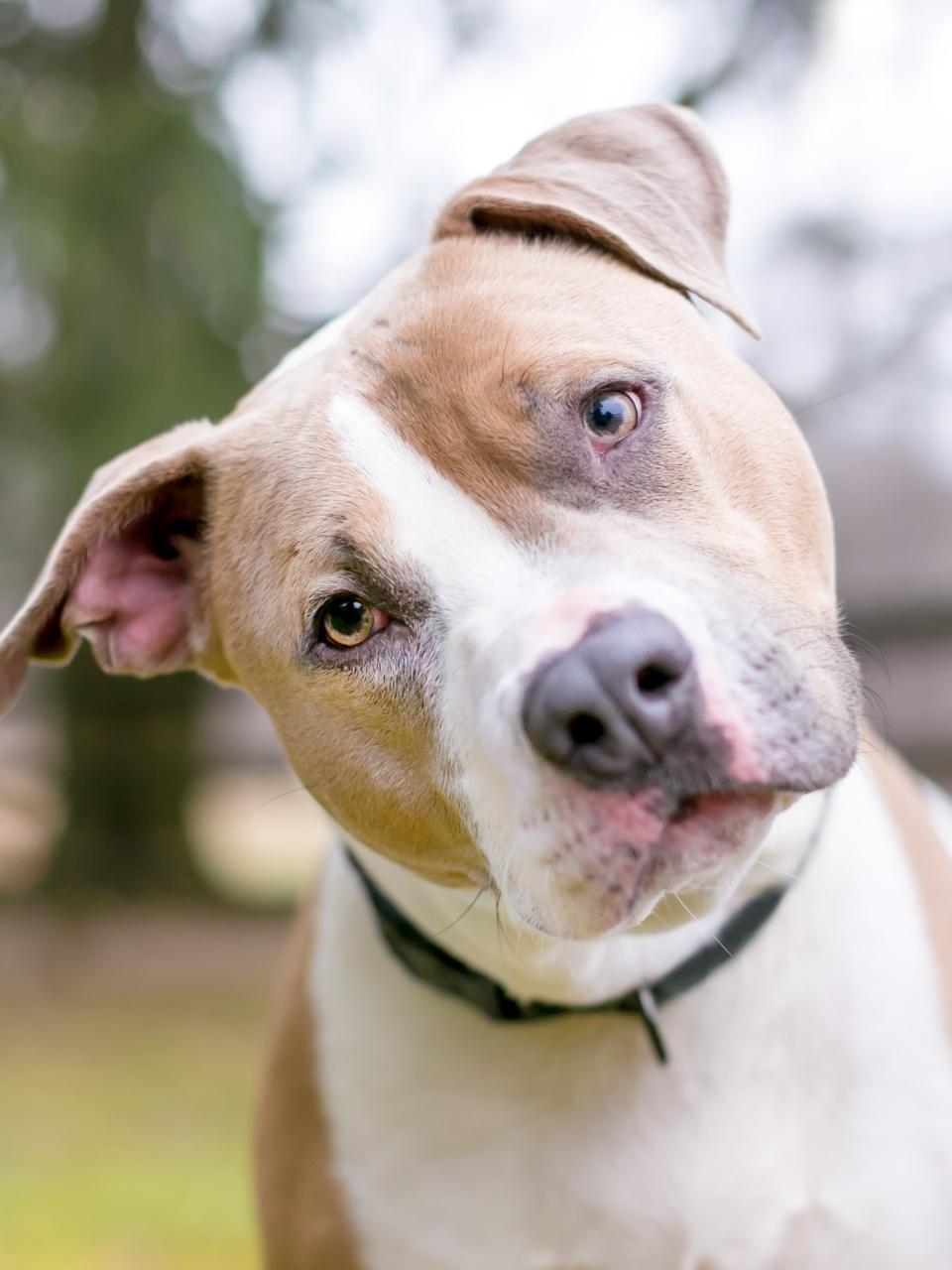
Vestibular disease also occurs in younger patients, and there can be many causes including recent head trauma, bleeding on the brain or infections of the central nervous system.
If your dog develops sudden signs that are consistent with vestibular disease, it is important that they are assessed urgently.
Very commonly, a head tilt will be linked to ear infections. Indeed, about 7% of dogs experience an ear infection each year, with floppy-eared dogs being at higher risk. A dog head tilting accompanied with lots of wax or a bad smell often suggests an ear infection.
As well as head tilting and scratching and shaking, you’re likely to notice a stinky discharge, red ear canal and a reluctance for their ear to be touched. A head tilt is usually indicative of an infection that has been there a while and has progressed past the outer ear.
If the infection has progressed to the middle or inner ear, it may be more difficult to treat and may require longer than the typical 7-10 days of antibiotics or antifungal therapy. Request that your vet swab the ear, to determine which micro-organisms are involved.
Less commonly, we will be looking at a different medical cause of the head tilt such as:
Nutritional deficiency (thiamine). Consider this in dogs fed on home-cooked diets
Ruptured eardrum. This is usually secondary to an ear infection that has gone untreated for a long time, or a foreign body within the ear.
Toxin exposure
Neurological issues
Brain tumor or ear tumor (rare)
Hypothyroidism
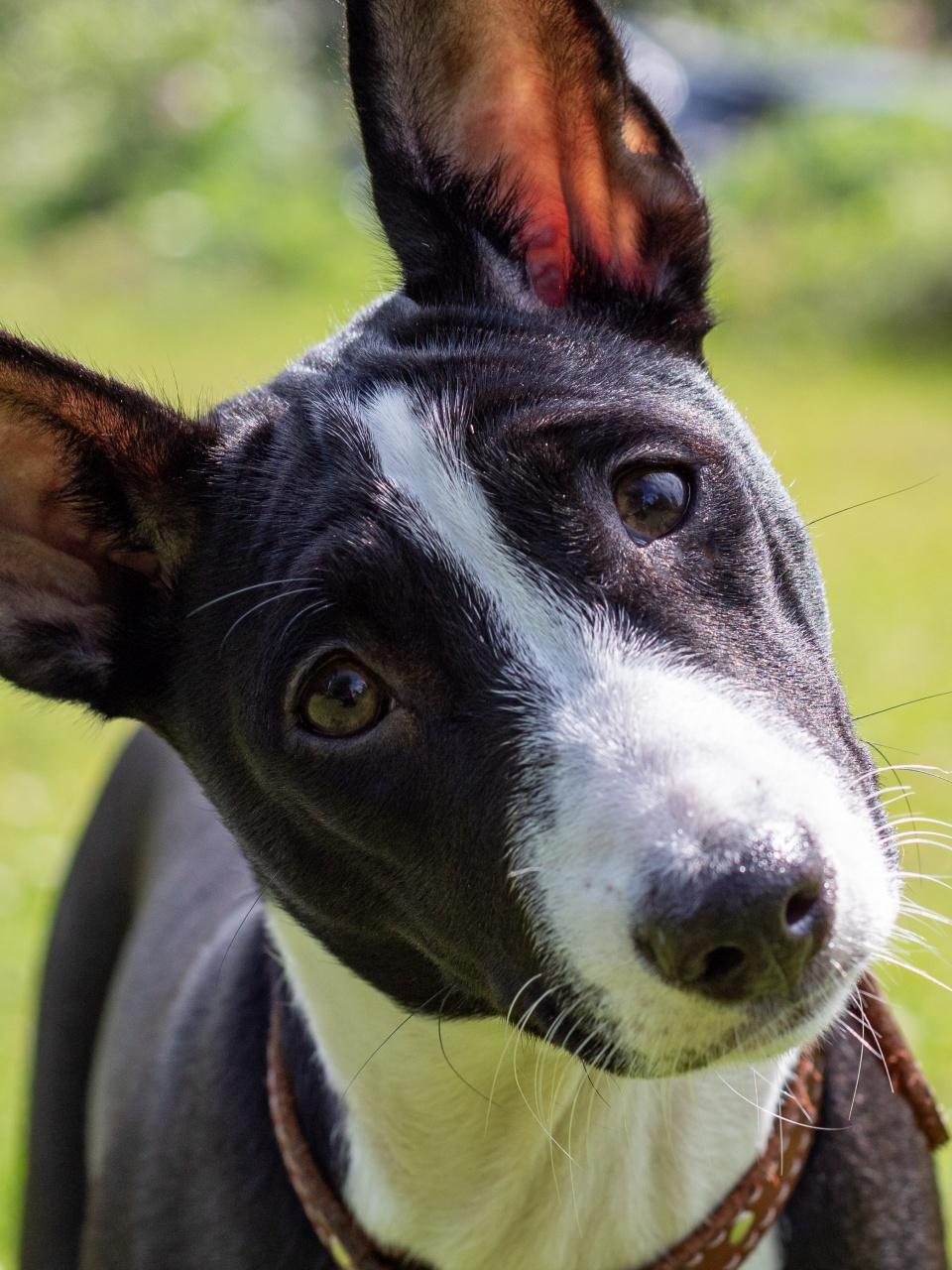
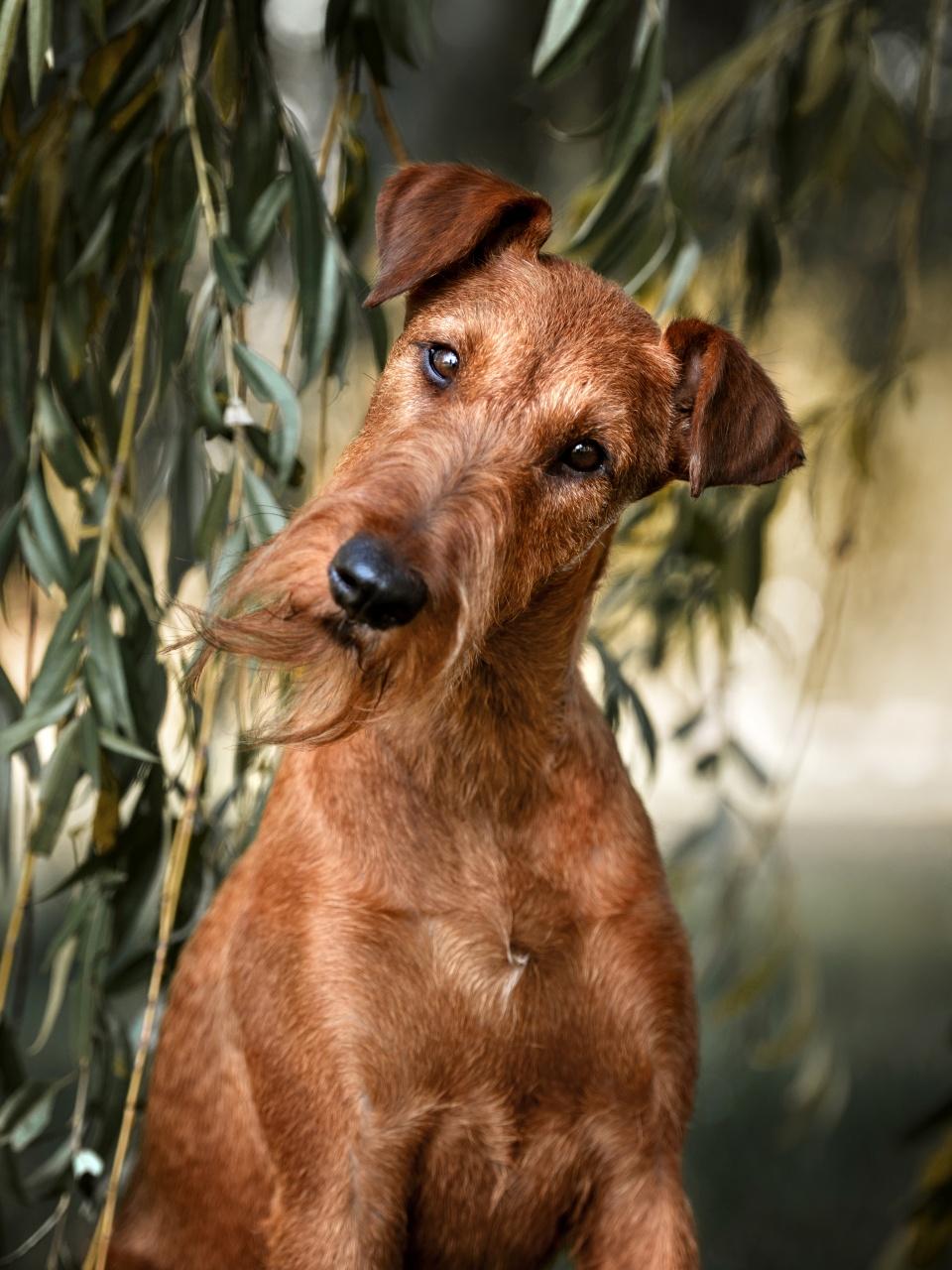
It is a good idea to schedule a routine vet check if your dog is tilting their head a lot more than usual, has a persistent head tilt or has additional symptoms.
Emergency vet care is needed if your dog is experiencing any balance loss or disorientation, if they seem to be in pain, if they’re persistently vomiting, have nystagmus, are circling, or if there has been a known toxin exposure.
Most of the time, canine head tilting is a charming behavior that is short-lived and easily explained. It is their way of learning more about the world around them, and of focusing on things.
Most owners adore when their dog tilts their head, and it is certainly something to be encouraged and rewarded. However, this is only when the head tilt can be explained and does not continue. Persistent or unusual head tilting is something to have checked by your vet.
Most will do it from time to time, yes. However, there is a good deal of individual variation and some dogs twist and rotate their heads at the drop of a hat, while others only do it rarely.
Follow Us On
Check Out Our Most Popular Content