Your Cart is Empty


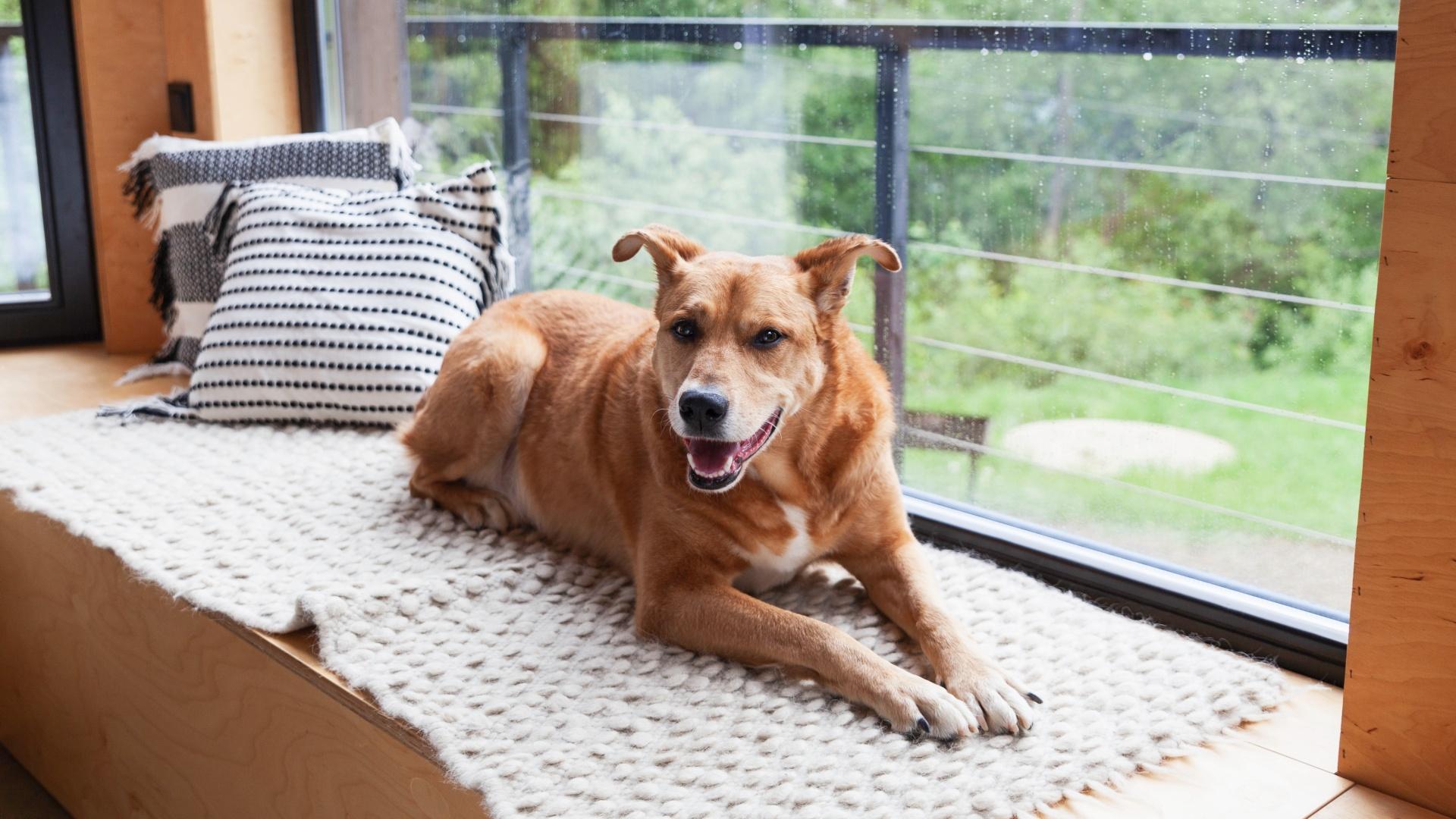
A rescue dog peeing in the house is a hugely prevalent issue and one you will be able to overcome with the right tools and a little patience. Toileting accidents are one of the most common problems experienced by new adopters. Best success is achieved by identifying the cause, while being understanding and supportive of your new furry friend.
You'll want to identify any medical causes first, particularly if your dog has had ongoing issues with toilet training- this is a common reason for re-homing. Once ruled out, establish a consistent routine and watch your new dog flourish.
Why Is My New Rescue Dog Peeing in the House?
Rule Out a Medical Issue Before You Start Training
The 3-3-3 Rule: What House Training a Rescue Dog Actually Looks Like
The First 48 Hours: How to Stop the Accidents Right Now
How to Potty Train a Rescue Dog: A 6-Step Plan
House Training Adult Dogs vs. an Older Dog: What Changes
When an Adopted Dog Pees Indoors for Behavioral Reasons
How to Clean Up So Your Rescue Dog Doesn't Pee in the Same Spot
How Toxic Is Dog Urine in a House?
How Long Does It Take to House Train an Adopted Dog?
See a vet before you start to train your rescue dog. Any medical issue has to be ruled out first
Stick to a potty training schedule and provide ample supervision
Reward toileting in the right spot and use an enzymatic cleaner on any accident
Keep the 3-3-3 rule in mind (more on this later). It may take several months before you start making big strides
Peeing in the house is to be expected in the early weeks but is a problem that can be overcome
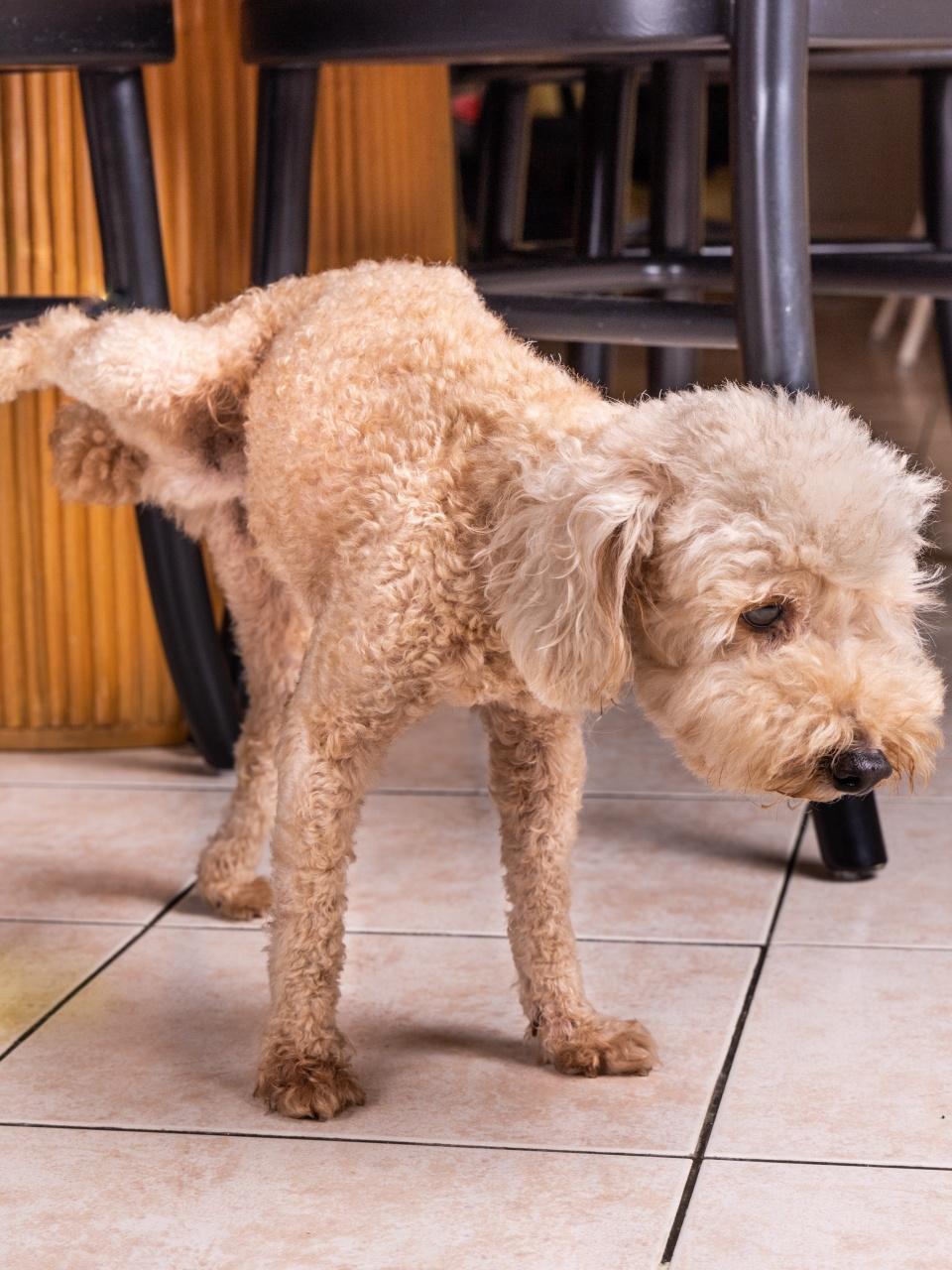
A new rescue dog peeing in the house is usually one who was never trained. However, toileting indoors can also be down to anxiety, a lack of understanding, or even hormonal marking.
Many rescue dogs have never lived in a house and have no concept that indoors is different from outdoors. Some spent months in a kennel where soiling their own space was unavoidable, which erodes the natural instinct to keep the den clean. Some dogs were house trained by a previous owner, but they are now learning a new schedule and getting used to a new environment.
Importantly, dogs do not urinate out of revenge or guilt . It is just not something they do; their mind does not work in this way. There will always be an underlying cause, whether it is ongoing behavioral issues, a lack of a consistent schedule, or a medical issue like bladder stones.
| Cause | What it looks like | Why it happens | First move |
|---|---|---|---|
| Medical issue | Straining, frequent small puddles, blood in urine, excessive drinking, accidents in a dog who was reliable | Causes include urinary infections, ectopic ureters, bladder stones, and conditions such as diabetes, prostate disease, and kidney disease | Vet visit before any training changes |
| Stress & new environment | Started at/after adoption; worse when alone or at night; other stress signs | Some dogs struggle to cope with change and anxiety can lead to trouble remembering and following routines | Decompression + routine (see 3-3-3) |
| Never house trained | No preference for outdoors; goes anywhere, calmly, with no anxiety | These dogs have never been shown where they should pee. They believe peeing indoors is what is expected of them | Start from zero, as with a new puppy |
| Marking | Small volumes, vertical surfaces, new objects/furniture, typically intact males | Marking is instinctive and can make a dog feel more at home. It can be a response to nearby dogs or a signal of their fertility | Manage access + see behavior section |
| Submissive / excitement urination | On greeting, when scolded, when leaned over; dog crouches, tucks tail | This is an involuntary response to fear and not a deliberate choice | Change the greeting, never scold, as any anxiety spike makes things worse |
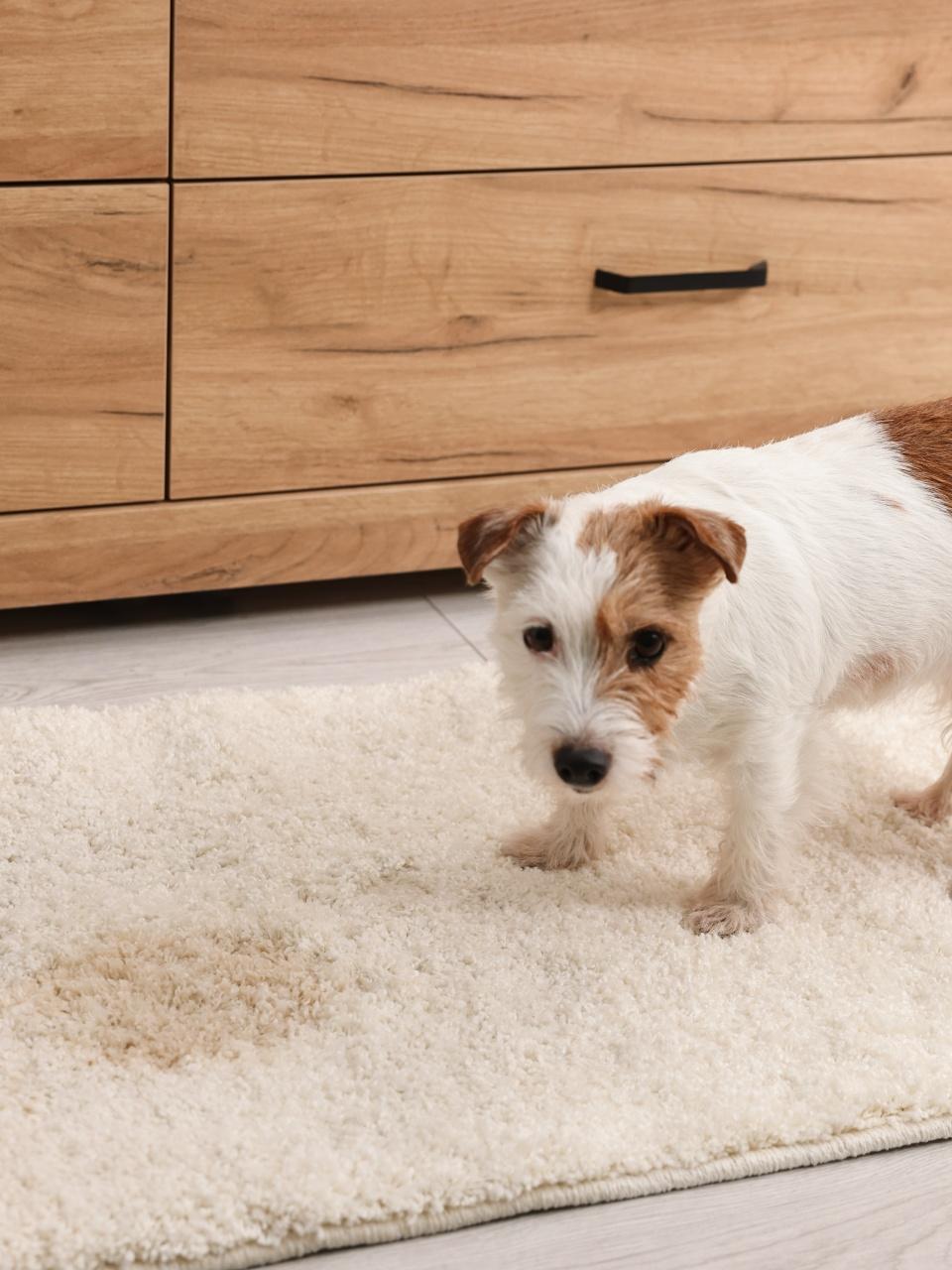
Any dog who suddenly starts peeing indoors — and any newly adopted dog with an unknown medical history who is not responding to the training — should be seen by a vet, before you conclude it is a training problem. No amount of consistent training will fix bladder stones or a chronic urinary infection, so see a vet before you start training.
Potential culprits include:
Urinary tract infection. Other signs of a UTI can include smelly, cloudy or bloody urine, genital licking and constantly urinating small amounts
Incontinence. This is especially common in old females who were spayed at a young age. Incontinent dogs drip urine and frequently wake up with wet fur around their genitals
Conditions that increase thirst and urine volume, e.g. kidney disease, diabetes, Cushing's Disease
Pain and arthritis making it hard to get up, get outside, or posture to urinate. This is going to be seen more in older dogs and larger breeds
Medication side effects. Corticosteroids, for example, are well known for causing excess thirst and urination
Your vet will want to get a brief history of what has been going on and would like to see any medical history you can provide. Let them know about any other symptoms you may have noticed. They should then perform a thorough physical exam, including a prostate exam for an older dog who has not been neutered.
Your vet may also suggest some basic diagnostic tests, including a haematology and biochemistry blood test and a urine analysis. An ultrasound of the bladder may also be recommended, particularly if your vet is suspicious of bladder stones (these are more likely in adult dogs vs puppies).
Some red flag symptoms that should not be ignored include straining, vocalising when urinating, bloody urine, or a total lack of urine. When these symptoms begin, contact your vet right away.
The 3-3-3 rule is a widely used guideline describing how a newly adopted dog typically settles in over the first 3 days, 3 weeks, and 3 months. It is something that experienced rescuers, behaviorists and vets will all be heard referring to.
| Phase | What your dog is doing | What potty progress looks like | Your job |
|---|---|---|---|
| First 3 days — decompression | Overwhelmed, scared, may hide, may not eat | Accidents are expected, even in a dog who was house trained before. | Do not start house training!Contain,supervise, clean, take out often. |
| First 3 weeks — settling in to their new environment | Learning the routine, starting to trust, testing limits | Accidents should be trending down. First reliable outdoor eliminations. | Run the 6-step plan below. Hold the schedule. |
| First 3 months — feeling at home | The true personality of your adopted dog will be emerging and a strong bond will be forming | Most dogs are reliably house trained by here — with some setbacks expected. | Expand freedom gradually. Keep the routine. |
3-3-3 is a loose guideline, not a schedule. A confident rescue dog may settle into their new home in two weeks, while a dog with a difficult history may take six months or longer. If your dog is taking a little longer than expected, this is not a failure, it is just a dog who needs a little more patience.
1.)Remove full access to the house — baby gates, a closed door, an exercise pen, or a crate. Freedom is earned, not given on day one.
2.)Supervise actively or contain — if you cannot watch the dog, the dog is contained. This prevents the urine smell from travelling around the home, which becomes a cleaning nightmare.
3.)Use a house line — a light leash dragging indoors while you supervise works so you can interrupt calmly and steer to the door without grabbing or startling a dog who may be hand-shy.
4.)Take the dog out far more often than feels necessary— this ensures you can reward lots of outdoor toileting, building those positive associations in your dog's mind. Positive reinforcement is key.
5.)Interrupt, do not punish — a calm sound, then straight outside. Reward if your dog finished toileting outdoors.
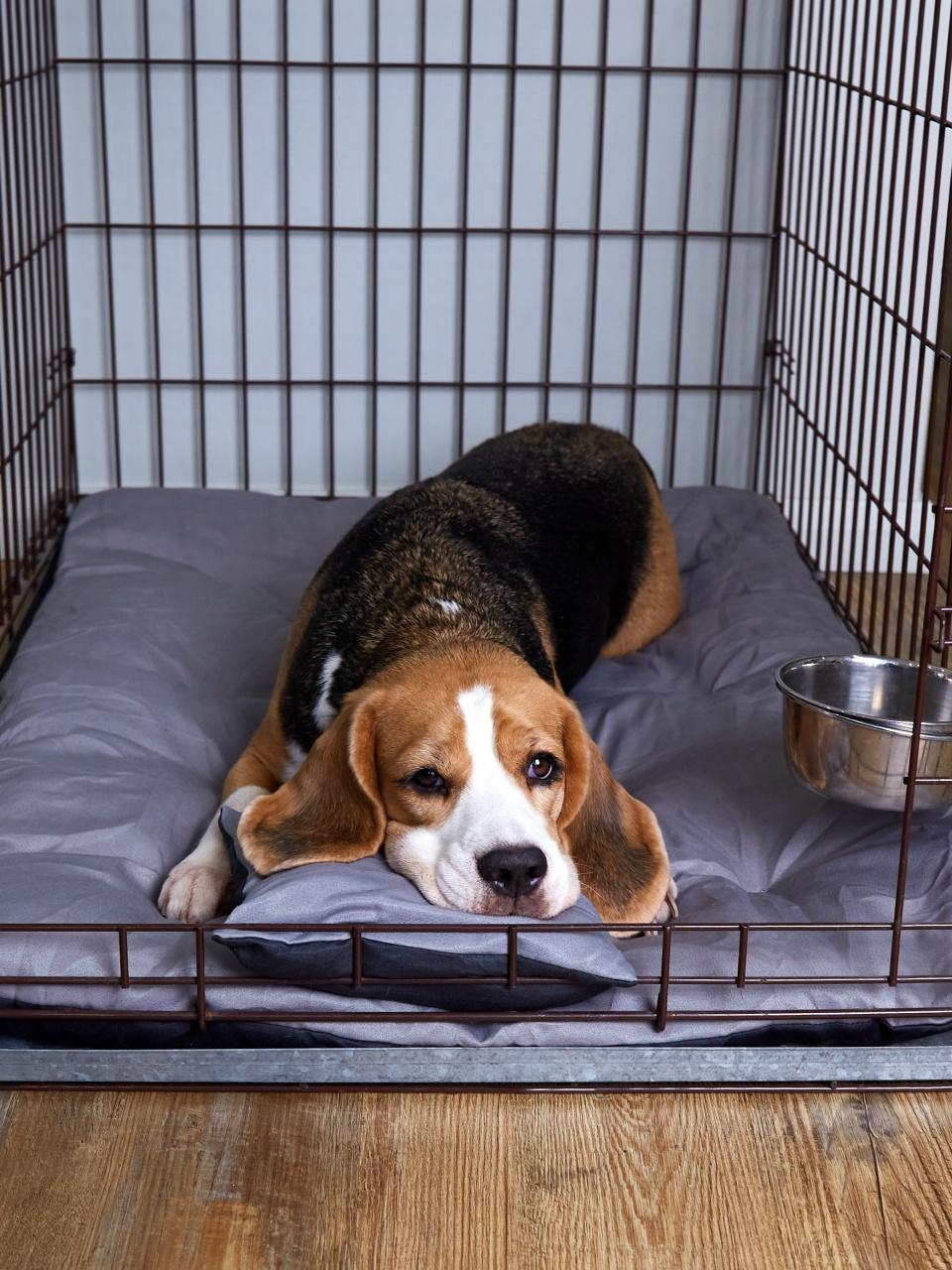
6.)Clean every accident immediately with an enzymatic cleaner (see the cleanup section) — otherwise the scent marks the spot as a toilet.
7.)Write down every accident— Make a note of the time, place, what happened just before. The pattern is the diagnosis.


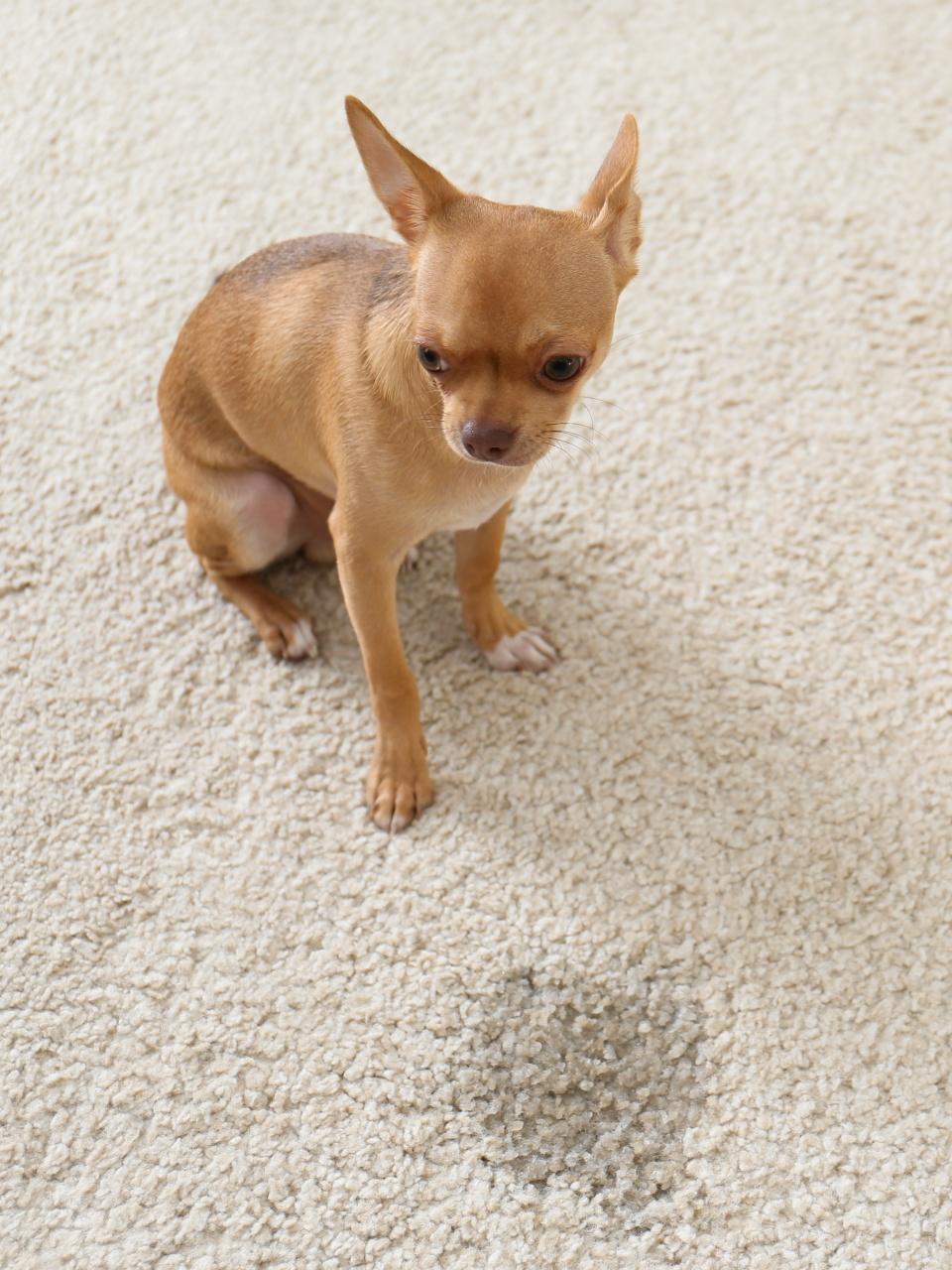
You potty train an adult rescue dog essentially the same way you would a new puppy — you simply start from zero and allow for the fact that the dog may be unlearning old habits as well as learning new ones. Adult dogs usually learn more quickly compared to pups, as they can hold their urine for a longer time.
Step 1 — Put food on a schedule. What goes in on a schedule comes out on a schedule; free-feeding makes poop elimination unpredictable.
Step 2 — Take the dog out on a fixed timeline, not on request (see the schedule table).
Step 3— Use one designated spot outside for toileting; the residual scent tells the dog what the spot is for.
Step 4 — Use one verbal cue, said once, as the dog begins to pee — not during, or you interrupt them.
Step 5 — Reward within seconds of them peeing. Praise plus a treat immediately, every single time, for the first few weeks. A reward given at the back door rewards coming inside, not eliminating.
Step 6 — Expand freedom gradually, one room at a time, and only after a run of clean days. Give it back too fast and you will regress.
Most dogs will avoid soiling the space they sleep in, which makes a correctly sized crate a useful house-training aid. A crate that is too large lets the dog pee at one end and sleep at the other.
Crate training does not work for every individual. A dog who was kennelled long-term may have already lost that instinct, in which case the crate is not the answer.
Never use the crate as punishment or as a place that the dog is confined too for excessive amounts of time, that is simply not its purpose.
| Time | Trigger | What to do | Notes |
|---|---|---|---|
| First thing 6 - 8:00 AM | Waking up | Straight outside, before anything else | Bladder is fullest. Carry/leash small or slow dogs. |
| 9:00 AM | After breakfast | Out within 10 minutes of eating | Many dogs will defecate at this time |
| 10:30 AM | Mid-morning | Scheduled break | Pet parents often use this time for some outdoor play or training |
| 12:30 PM | After play time | Out immediately after | Activity can encourage both bowel movements and pees |
| 2 - 3:00 PM | Afternoon / after a nap | Scheduled break | It is very common for dogs to need to eliminate on waking |
| 6:30 - 7 PM | After dinner | Out within 10 minutes | Those digestive reflexes have been triggered. If your dog does nothing, try again in 10-15 minutes |
| Last thing 10:00 PM | Before bed | Final break — do not skip | Never restrict water at night unless specifically advised to do so by your vet |
| Overnight | If needed | One night break for older dogs, puppies, or dogs with small bladders | Night-time potty breaks should be kept quiet and boring, so your dog goes right back to sleep |
It helps to log things. Keep a simple note of every elimination and every accident for two weeks. Not down any patterns you spot e.g. always at 3pm, always in the guest room, always when left alone. This is what turn guesswork into a fix.
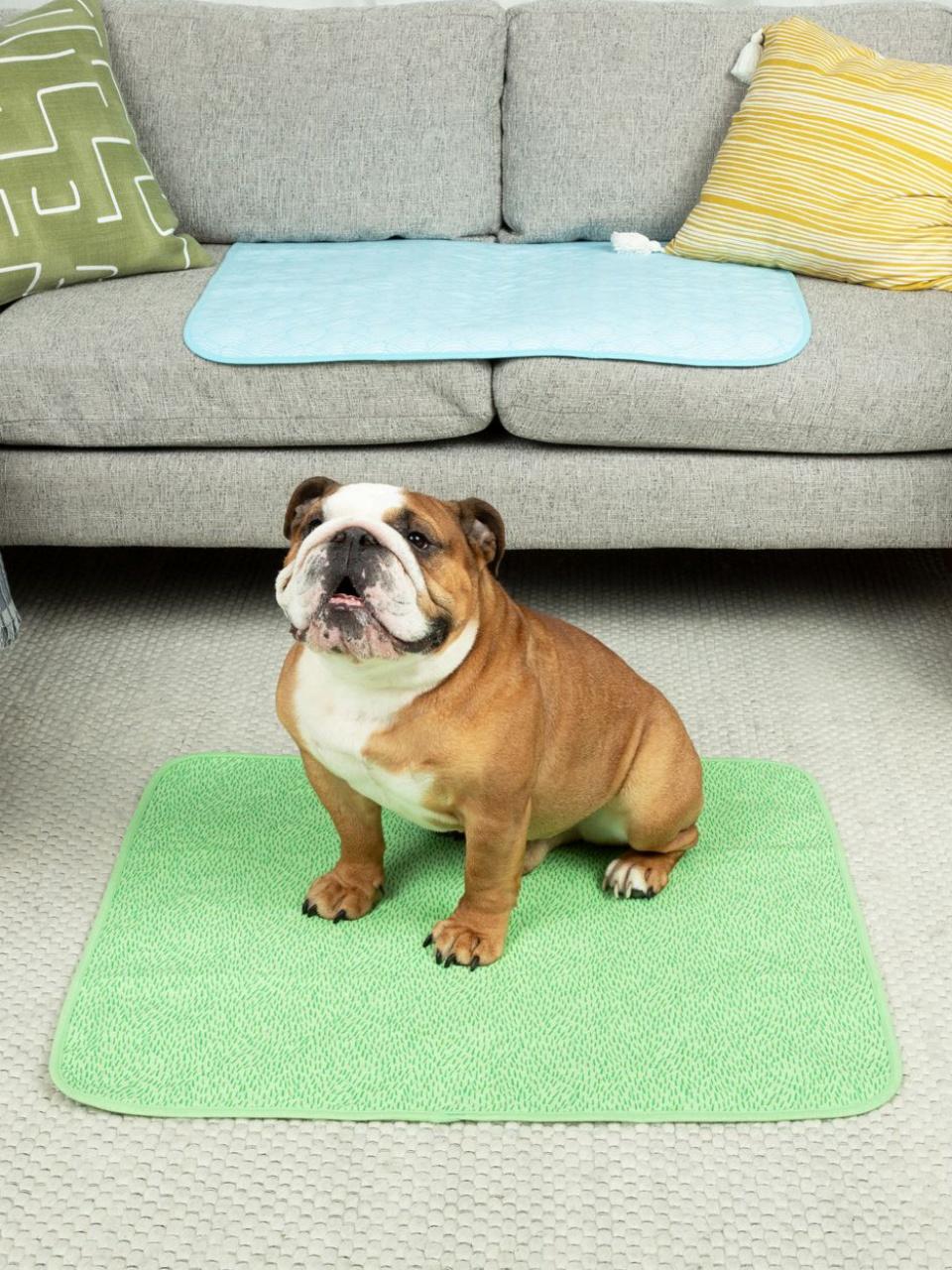
Pads genuinely help in a number of circumstances. This is true when the dog is a senior or has a medical issue, you live in an apartment or a walk-up, there is bad weather, the dog is confined to one room or a crate area, or you are protecting bedding, a crate, or a car.
Be aware that pads can slow full outdoor training when they are used as a permanent substitute for going out — the dog learns that eliminating indoors is acceptable on a particular surface, which is the opposite of what you want.
Pee pads can offer some extra piece of mind and protection but are not a short-term fix to a dog that is not potty-trained.Reusable pee pads that can be washed are usually the best choice- both for the planet and for your wallet.
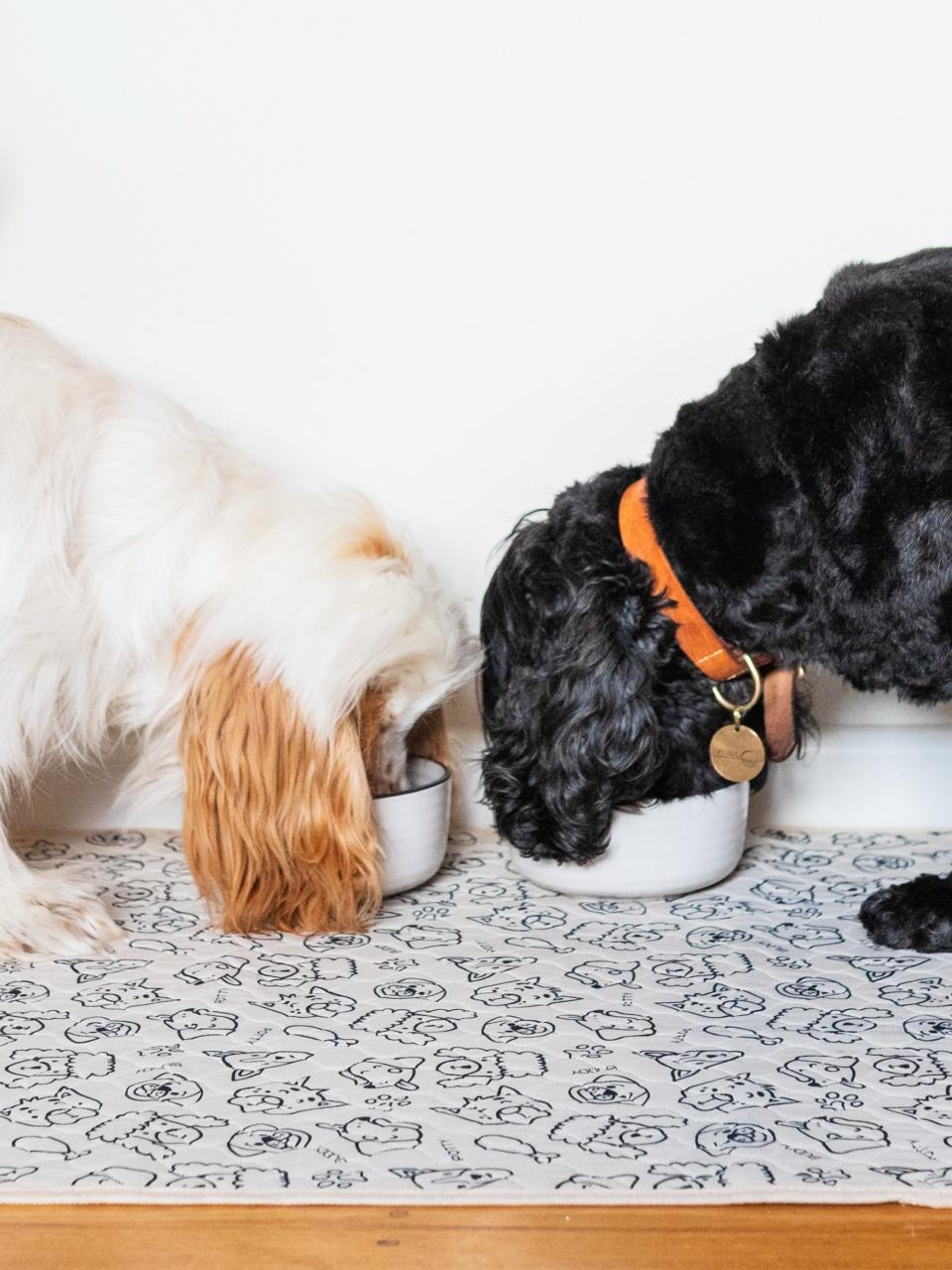
A dog is never too old to potty train; older dogs simply need more time, more breaks, and more patience.
| Young dog / puppy | Adult dogs | Older dog / senior | |
|---|---|---|---|
| Roughly how long they can hold it | 2-4 hours | 6-8 hours | 4-6 hours |
| Potty breaks per day | 12 | 4 - 6 | 6 - 8 |
| Overnight break needed? | Yes | Rarely | Sometimes |
| What to adjust | Frequent breaks, short confinement | Standard plan; expect faster learning but possible old habits to unlearn | Shorter confinement, gentler pacing, easier access to the door, check for incontinence and arthritis |
For older dogs, a medical issue is often the reason behind a potty training break down. Things like incontinence, arthritis or cognitive decline require vet intervention and management rather than more training.
If the vet has ruled out a medical cause and the accidents follow a pattern — always on greeting, always when alone, always on vertical surfaces — you are looking at a behavior, and behaviors need a targeted fix, not more repetitions of the same training.
| Behavior | How to recognise it | What is actually going on | What helps |
|---|---|---|---|
| Marking | Small volumes, vertical surfaces, new or novel items, repeated spots | Your dog is attempting to send signals to other dogs and to claim the home as their own | Manage access, clean thoroughly, belly band as a stopgap, consider neutering |
| Submissive urination | On greeting, on being approached or leaned over, dog crouches / tucks tail / rolls over | This is a fear response that your rescue has not got control over | Low-key greetings, crouch sideways, no eye contact, never scold — scolding intensifies it, gradually build confidence |
| Excitement urination | On greeting or during play, dog is happy not fearful, more common in young dogs | This is another involuntary response | Keep arrivals boring, greet outside, most dogs outgrow it |
| Separation anxiety | Only when alone; plus vocalising, pacing, destruction near exits | These dogs are scared and not coping well. Their training has been forgotten in their panic | Gradual desensitisation; consult a behaviorist; do not punish |
Separation anxiety is hugely common in rescues, mainly as it is a top reason for re-homing. You may find your dog only soils when left alone. As well as soiling, they might display behaviors including vocalising, pacing, drooling or destruction.
This is not a dog being spiteful — they are panicking, and stress raises the urge to urinate. These animals need prompt professional help and should initially not be left alone. Importantly, punishment makes separation anxiety worse and must always be avoided.

Dogs return to spots that smell like a toilet, and a spot can smell like a toilet to a dog long after it stops smelling like anything to you. This is why "he keeps going back to the same place even though I cleaned it" is such a common complaint — and it is almost always a cleaner problem, not a dog problem.
Try to clean up any accidents right away
Blot up as much urine as possible before it soaks in — press, do not rub, which drives it deeper into the fibres
Saturate the area with anenzymatic cleanerand let it sit for the full dwell time on the label rather than wiping straight away, because the enzymes need time to break the urine compounds down
Blot and air-dry after cleaning
Block access to the spot while it dries and for a while afterwards.
Consider usingwashable pee pads in those areas of the home you are still working on
A regular household cleaner masks the smell for you but leaves the compounds the dog can still detect, so the dog reads the spot as a toilet and goes back. Those spots are still 'instructions' to your dog.
Never use an ammonia-based cleaner, because urine breaks down into ammonia and an ammonia cleaner effectively signposts the spot as a urination site. This is often why dogs will pee in a recently cleaned spot.
An enzymatic cleaner uses enzymes and bacteria that break down the proteins in urine that leave smells and stains.
Occasional accidents cleaned up promptly are a nuisance, not a health hazard.
Dog urine contains urea which breaks down into ammonia- the source of that smell. The ammonia in urine can become a problem when there is repeated soiling in a poorly ventilated space. Soaked carpets or baseboards can make it hard to eliminate the urine. Ammonia acts as a respiratory irritant while trapped moisture has the potential to lead to mold.
Those most at risk from pet urine are young children, seniors, asthmatics and those who are immune-compromised. With prompt action, we can keep everyone safe, and the AVMA advises cleaning urine up promptly and wearing gloves.
The answer to the health question and the training question have the same answer — clean it properly and clean it fast.
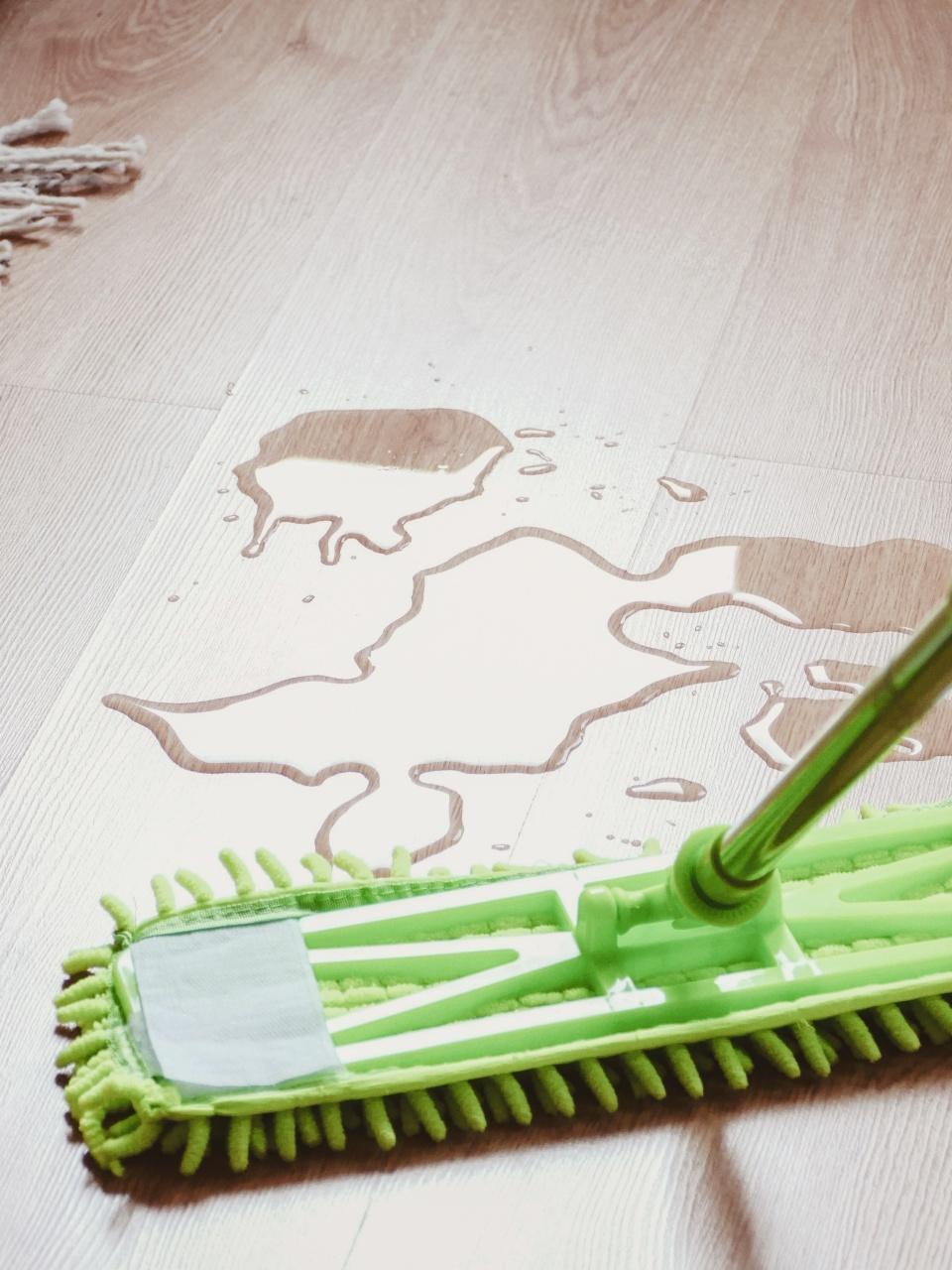
Realistically, house training takes from a few weeks to a few months. A dog who never got into the habit of peeing indoors may be trained within a few weeks, while an adult with considerable behavioral issues or who spent a long time in kennels may take many months. Past living conditions significantly affect a dog's potty routine.
It can be helpful to make note of those major milestones, to see how far you and your rescue have come since day one. That first successful outdoor elimination on cue, the accidents dropping week over week, the first full clean week... these are not achievements to be sniffed at.
Some regression is normal and expected and should not be seen as a failure. Your rescue dog is not broken, they just need a little more time. The odd accident is to be expected and you may find it is linked to a slight schedule change or a recent stressor. When in doubt, tighten that schedule and consider a vet check if the issue persists.
Call thevet if:
There is blood in the urine
Your dog is uncomfortable, straining, or crying while urinating
You notice a sudden increase in drinking or urine volume
A previously reliable dog suddenly starts having accidents
Your dog leaks while asleep
Accidents come with lethargy, vomiting, or appetite change
Accidents persist despite consistent training and a medical check has never been done
Call a certifiedbehaviorist if:
Your rescue dog only soils when left alone
Marking continues despite management and neutering
There is fear, anxiety, or aggression alongside the soiling
You have been consistent for weeks with no measurable trend.
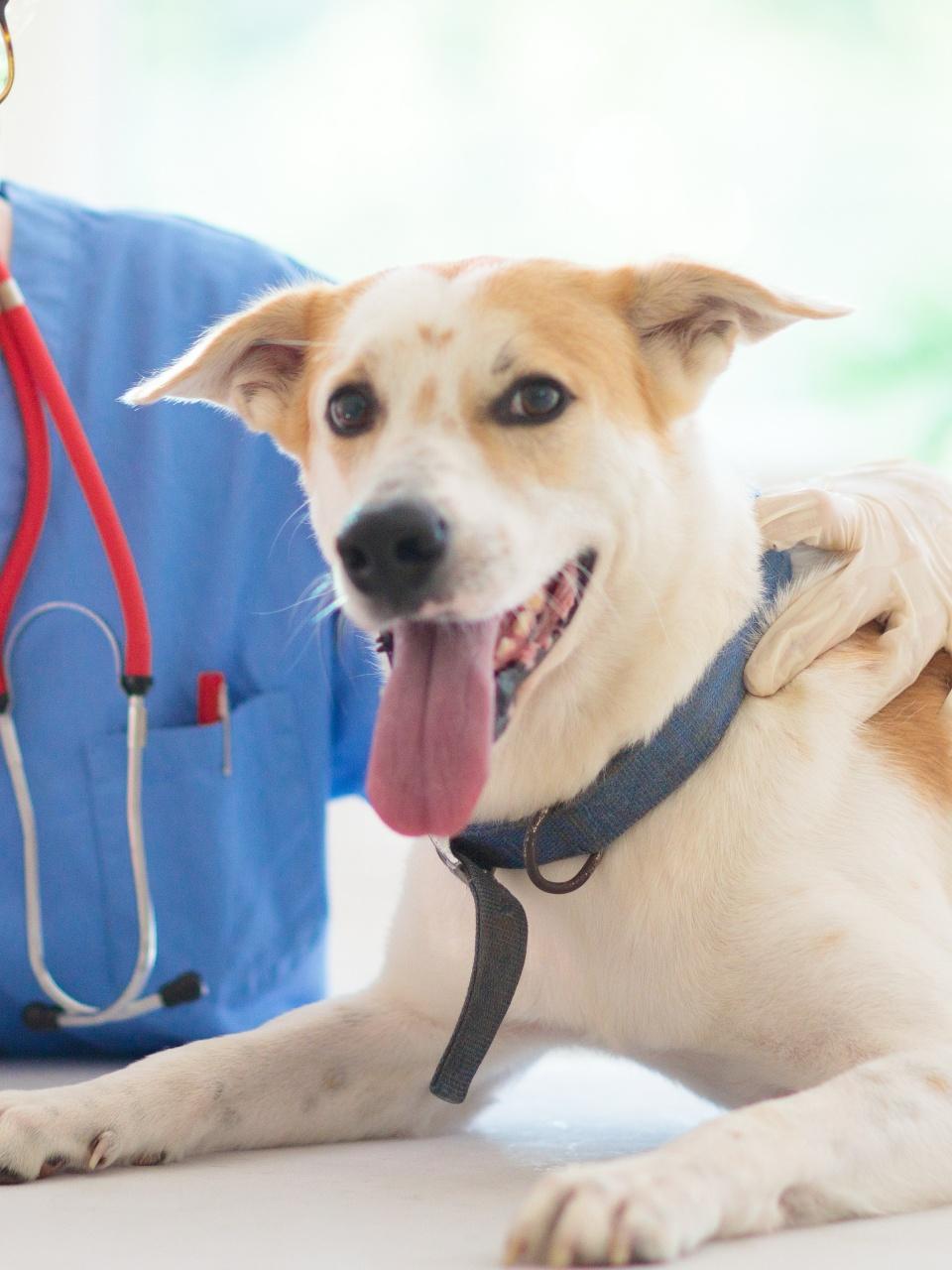
For behavioral issues like separation anxiety, a veterinarian or veterinary behaviorist can discuss whether anxiolytic medication is appropriate alongside behavior work. When used correctly, it can have a real impact.
If your training is not having the desired effect, book that visit with your local vet. When it comes to toilet training, consistent beats intensity.
Toilet training may seem intimidating at first, but you and your new dog will eventually crack it, as long as you stick to the guidelines.
Follow Us On
Check Out Our Most Popular Content