Your Cart is Empty


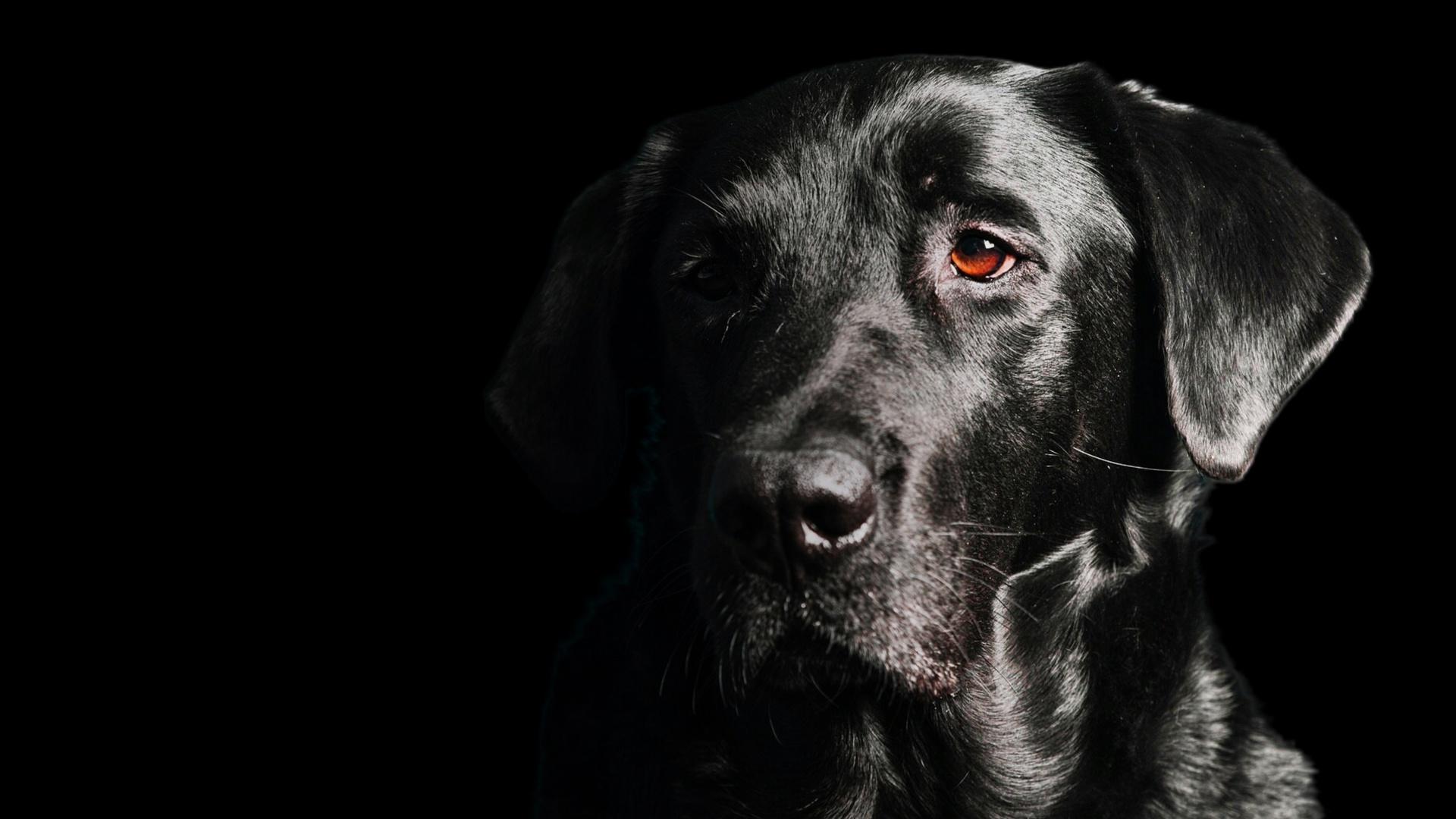
Dogs have evolved over time to be able to see and move about in low light. This served them well when hunting during dawn and dusk, when they were most active. Their eyes have got several adaptations which mean they can discern things much better than humans when the light is dimmed.
Importantly, your dog cannot see when it is pitch black. They’ve got excellent vision, but not super powers! They can detect things in low level lighting, though can see a limited color range and the image they see is not necessarily the sharpest.
⚠️ Medical Disclaimer: This article is informational only and should not replace professional veterinary advice, diagnosis, or treatment. Always consult your veterinarian before starting any treatment or medication for your dog. Only a qualified veterinary professional can properly diagnose your pet's condition and recommend appropriate treatment based on individual circumstances.
Dog Eye Anatomy: Do Dogs Have Night Vision?
Additional Vision Advantages for Dogs
Do Dogs See Better in the Dark Than Humans?
Can Dogs See Better at Night Than Cats?
Other Night Vision Capabilities & Limitations
Should I Leave a Light On for My Dog?
What to Do if Your Dog Has Vision Problems
Eye Conditions Affecting Canine Night Vision
If we define night vision as being able to see well outdoors in the dark of night, then yes, dogs are great at this. However, do keep in mind that there are stars and a moon providing some level of light. If there is total darkness, our dogs struggle to see anything at all, just like us.
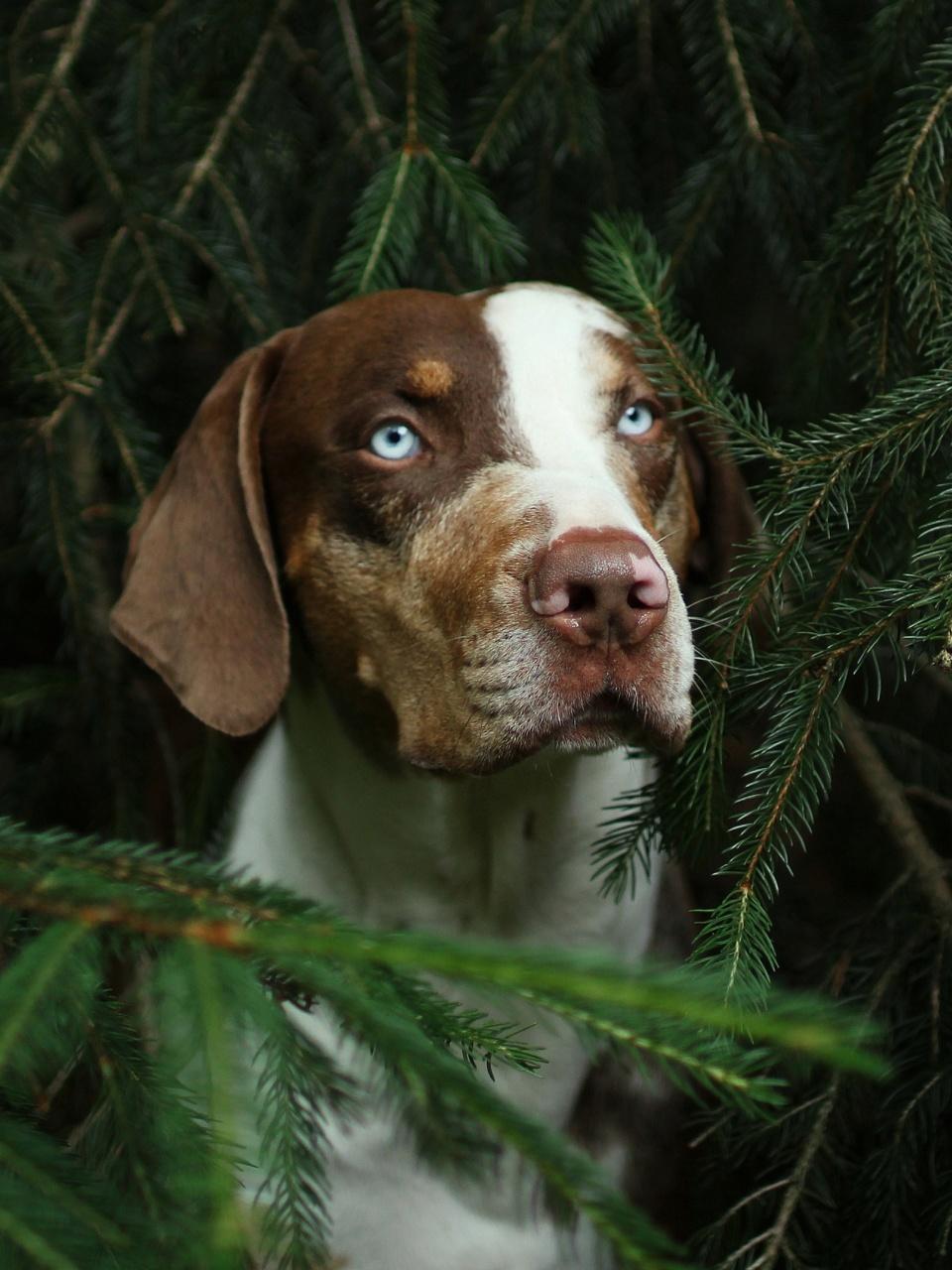
Wolves are the dogs’ ancestors and they’re known for being crepuscular creatures. This means that they are most active when the sun is rising and when the sun is setting, and this is when they choose to hunt. Their prey is generally active at twilight, so this is when it makes sense for them to be out and about.
Over time, their vision adapted so they could see well in dim light. One important feature of their vision is the Tapetum Lucidum. This is a reflective layer behind their retina that allows the light receptors to capture light not just once, but twice.
If you’ve ever noticed your dog has ‘shiny’ eyes when you take a photograph using flash photography, the tapetum lucidum is the reason why.
It is interesting to note that the color of the tapetum lucidum varies from one dog to another. It is often a shiny green, but can also be amber, or even golden.
The eye is a complex anatomical body part that functions to allow light to enter the body, so it can be converted to signals which are detected and interpreted by the brain.
The outer layer of the eye is the cornea, and this can get easily scratched, causing eye ulcers. Its job is to focus the light that enters the eye.
The iris is the colored part of the eyeball (often brown or blue in the dog) which can control the amount of light allowed to enter each eye. It is the eye lens which then focuses this light onto the retina.
The retina has light receptive cells (rods and cones) that function to detect both color and light. The optic nerve then carries these signals to the brain for processing.
As mentioned, the retina is where the light sensing cells reside. Cones are great at detecting color and fine detail, and work best in brighter light. Rods are great for detecting things in low light and pick up on movement.
Not surprisingly, dogs have far more rods than us humans do. This abundance of rods is why they’re such masters at detecting movement and shapes in dim light.
Another feature of the canine eye is their larger pupil size, when we compare the eyes to humans. This allows for more light to enter the eye, which is especially of importance when light levels are low. For both dogs and humans, the pupils automatically dilate, ensuring as much light as possible can hit the retina.
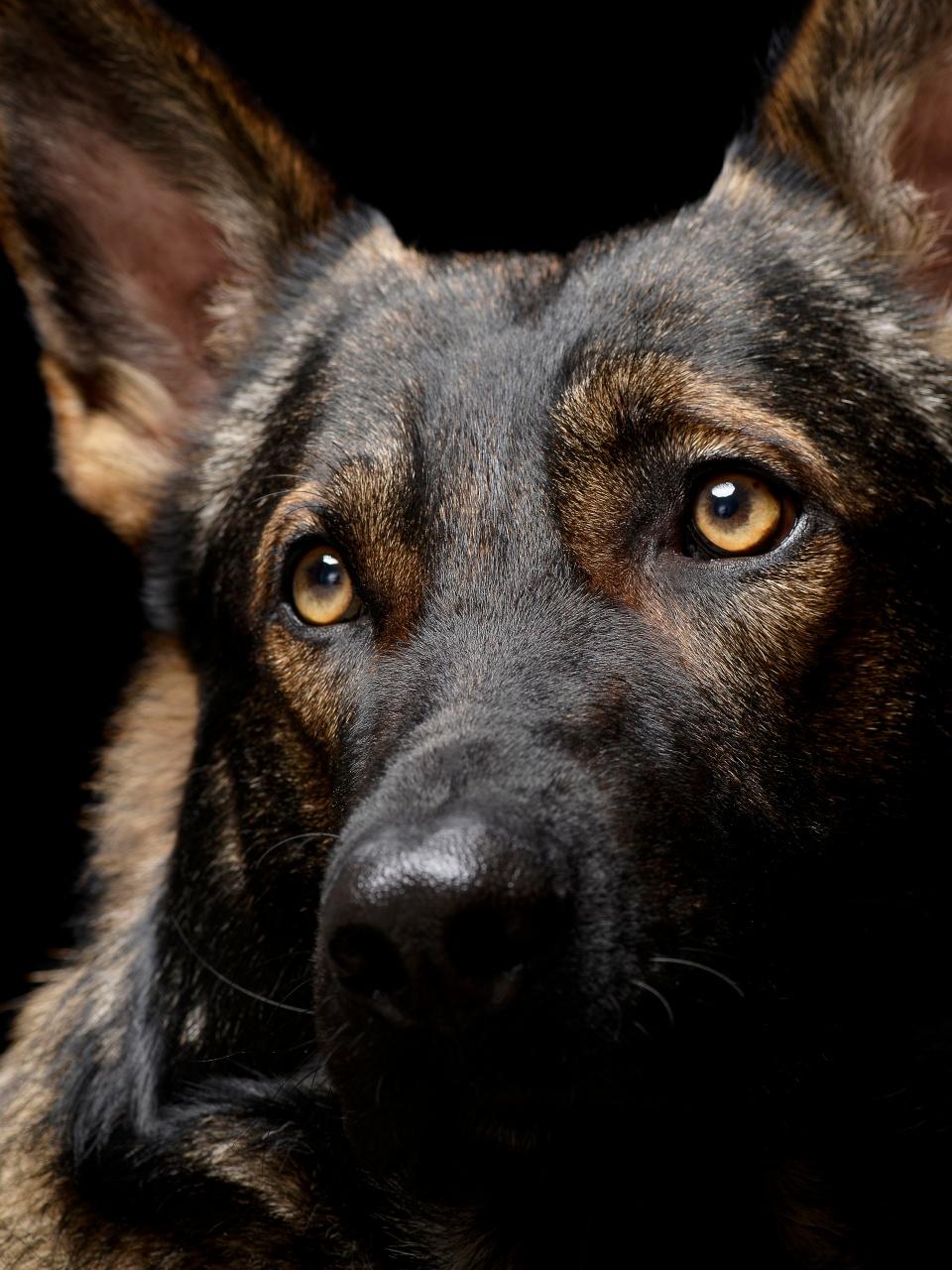
Clever canines have adapted their vision in a couple of other ways.
Flicker Fusion Frequency (FFF). Dogs can see flickering light and movement more clearly than we can. This sets them up for success when waiting to spot prey move in the corner of their eye.
Wider peripheral vision. Being able to see more to each side of the head vs humans is another big advantage. Their eyes are positioned more to the side of their heads and, depending on breed, they have a field of view about 60 degrees greater than ours.
There is no doubt that dogs win this one, and dog eyesight at night is much better than human’s. While it varies from one individual to another, some experts estimate that a dog’s night vision is about 5 times superior to ours.
Consider a security camera scanning a burglar entering the home. If it worked like a human’s eyes, it may show up a dim and blurry image with vague outlines. You might not even realise it is a person. A dog’s eyes, on the other hand, could detect a distinct outline of the person as they move, and a much clearer image of what is happening in the dark.
Importantly, dog’s eyes do require some light to work. If it is pitch black, they’ll see the same as us: Nothing.


As much as we’d love Fido to win this battle, our feline friends have superior night vision. They have an even more sensitive tapetum lucidum, a higher number of rod cells, and vertical pupils which work excellently to open very widely when the lights are low.
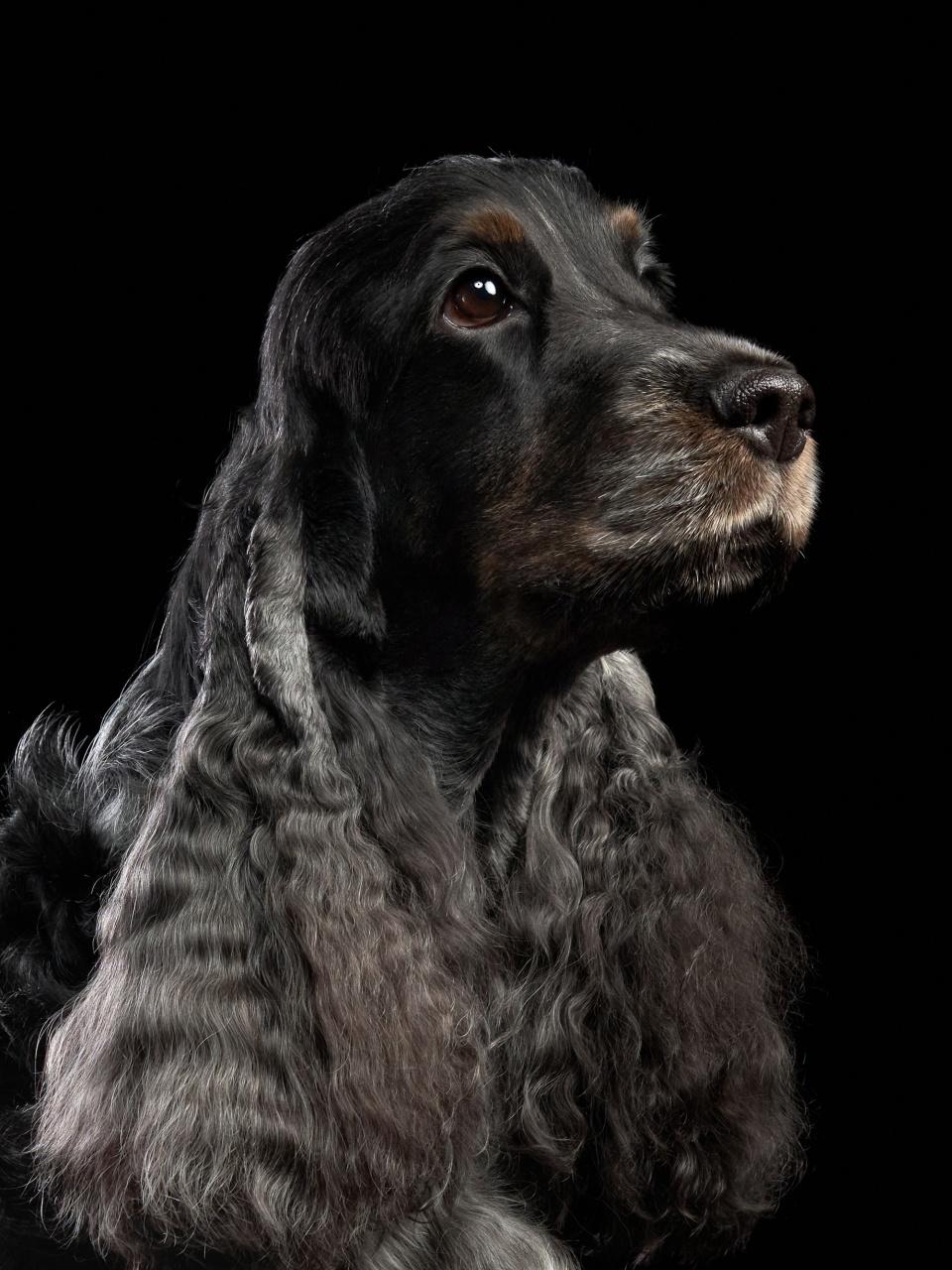
Be aware that there are both differences between dog breeds, as well as from one individual canine to another. Larger dogs that have bigger eyes can detect more light in dimly lit areas.
It is widely accepted that scent dogs and hunting breeds have the best low-light vision- including the Shepherds and Bloodhounds.
Interestingly, it is not the Sighthounds (like the Whipper or Saluki) that see best in dim light. These dogs were bred to spot movement at a distance, so have an abundance of cone cells. These cells work best in the day time.
Some owners ask can dogs see glow-in-the-dark objects and, yes- dogs can perceive them much like we can. However, they likely see them as a different color to us. While it may be a greeny yellow color to us, a dog might see it more as a glowing gray.
Whether or not your dog needs a light on will depend on their preference and what they’ve been used to since they were little. It can be nice to have a dim light on, to enable them to navigate the home with ease. A bright light is not a great idea, as it can interfere with their circadian rhythm and sleep patterns.
It is best not to have the overhead light on at full blast, but instead to invest in a small nightlight to have on in the same room that your dog sleeps. For most pets, this ensures a more restful night’s sleep and can limit night time movement or vocalising.
Keeping your dog somewhere pitch black is not advised. They need a low level of light to be able to safely move about, and so they feel safe and secure.
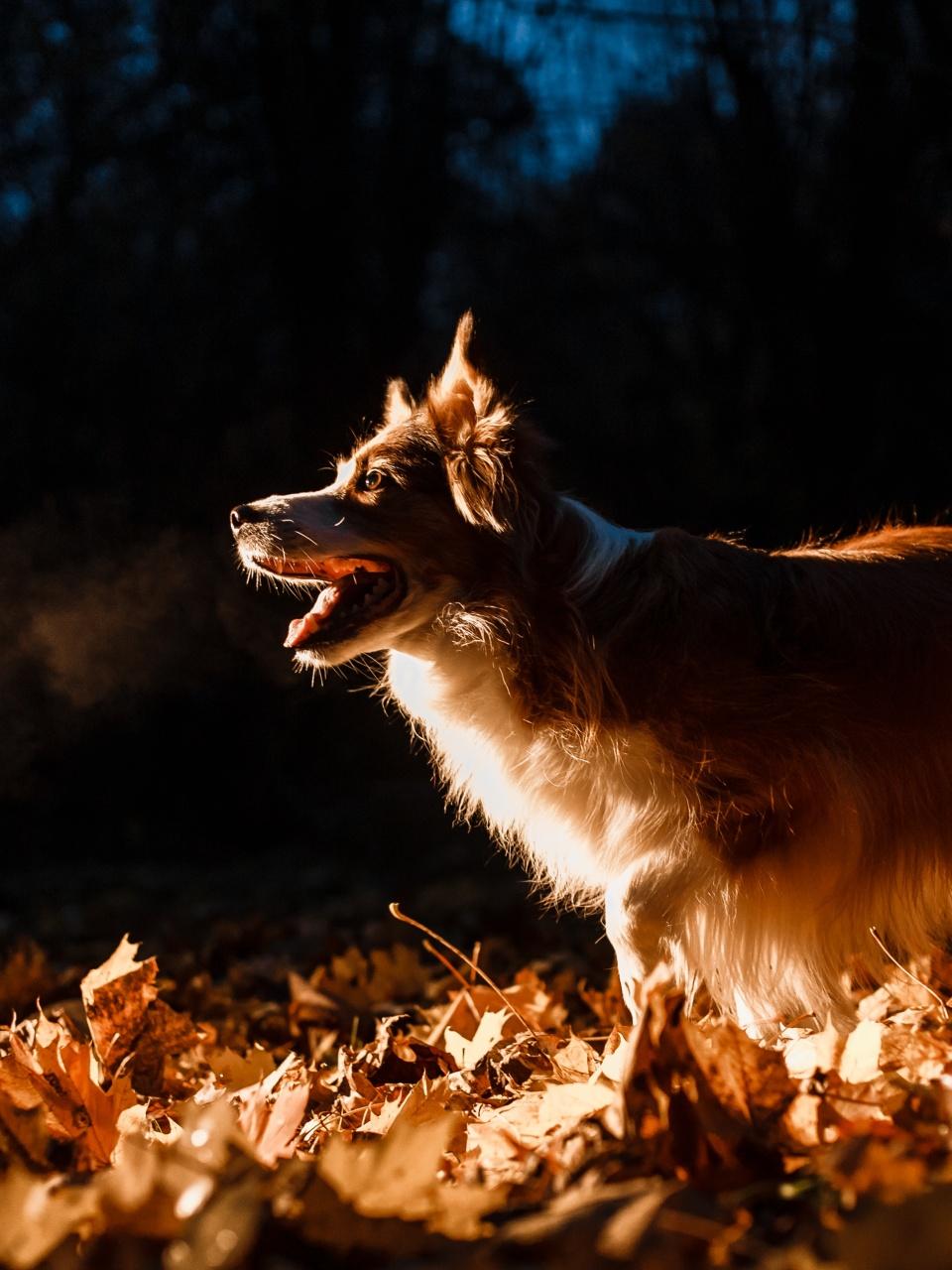
If you think there is something amiss with your dog’s vision, it is understandable why this would be concerning. Perhaps your dog is bumping into things, or is struggling to find their ball or toy when outside. Maybe you’ve noticed they are less confident in low light, or no longer make good eye contact with you?
If you have any concern that your dog’s vision has changed, don’t hesitate to contact your vet. Similarly, book in with a veterinarian if your dog has developed any eye symptoms such as:
Squinting
Eye rubbing
An eye discharge
Clouding or discoloration of the eye
Any scarring or denting on the surface of the eye
A red eye, or more blood vessels appearing on the surface
There are a wide range of medical issues that can affect your dog’s eyes and their eyesight and, for many, time is of the essence when it comes to their treatment.
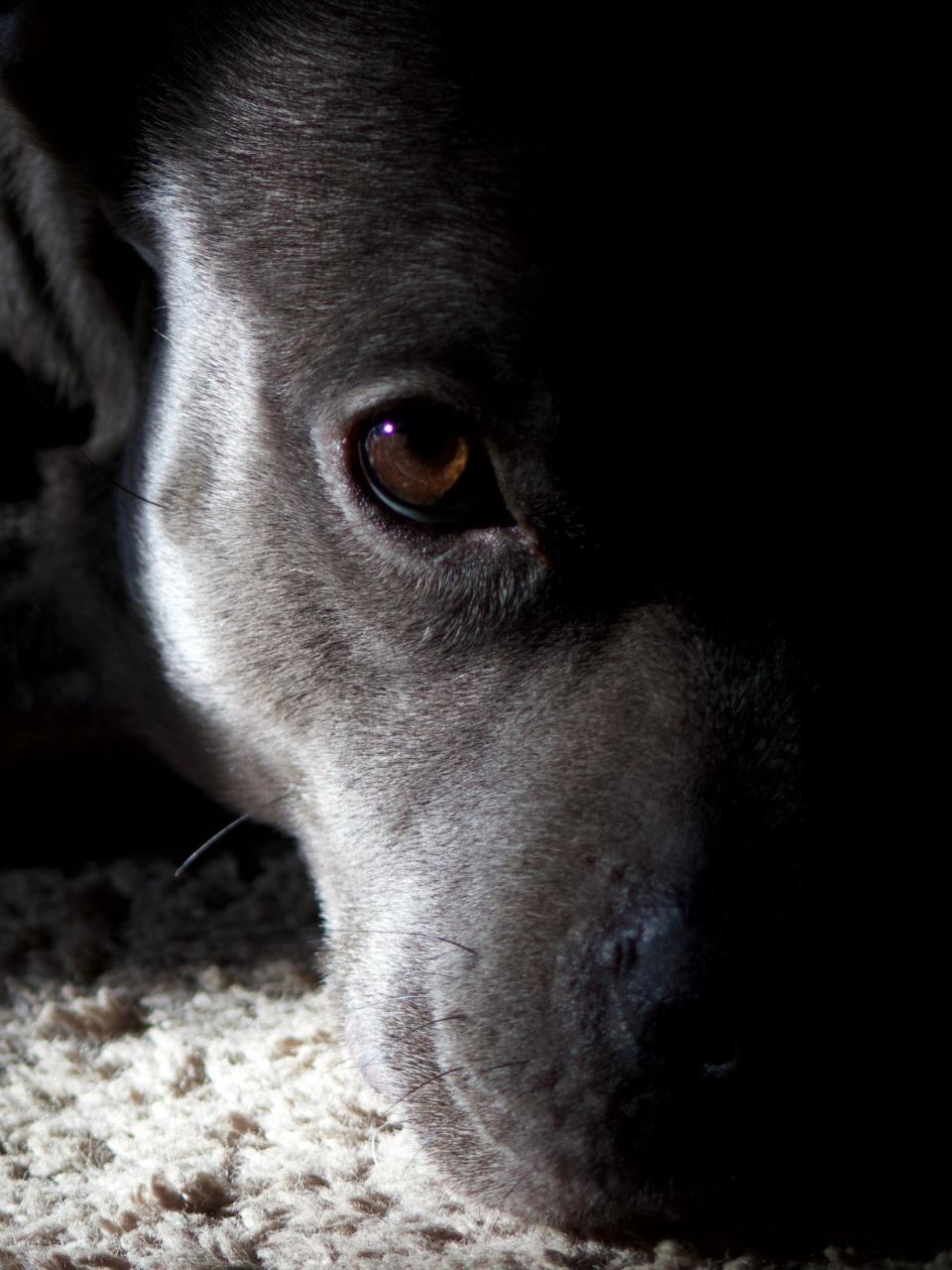
Progressive Retinal Atrophy (PRA) is the textbook eye condition which negatively impacts night vision of dogs. This is a genetic condition which causes the rods and cones (photoreceptor cells) to degenerate over time. The rods are affected early on in the course of the disease, so you may notice your dog struggles more in dim or low level lighting.
Some dog breeds are more prone to PRA include Poodles, Tibetan Terriers and English Springer Spaniels. It is recommended that breeding parents are screened for the disease, to ensure it is not passed on to their litters.
Retinal Detachment is another condition that may cause night blindness- or even total blindness- which may come on very abruptly. Pupils may be dilated and the eye itself can appear cloudy. Bring your dog in to the clinic immediately, as if the retina is re-attached quickly, there is the potential for eyesight to be restored.
Routine eye exams are important for those patients with known pre-existing issues and for certain breeds. For example, a dog who has had raised eye pressure (glaucoma), or one who has had a previous retinal detachment, should be seen for routine check ups.
Certain dog breeds must also have routine eye checks. Those prone to Dry Eye (such as the Pug and King Charles Cavalier) are advised to have their tear production checked at least once a year.
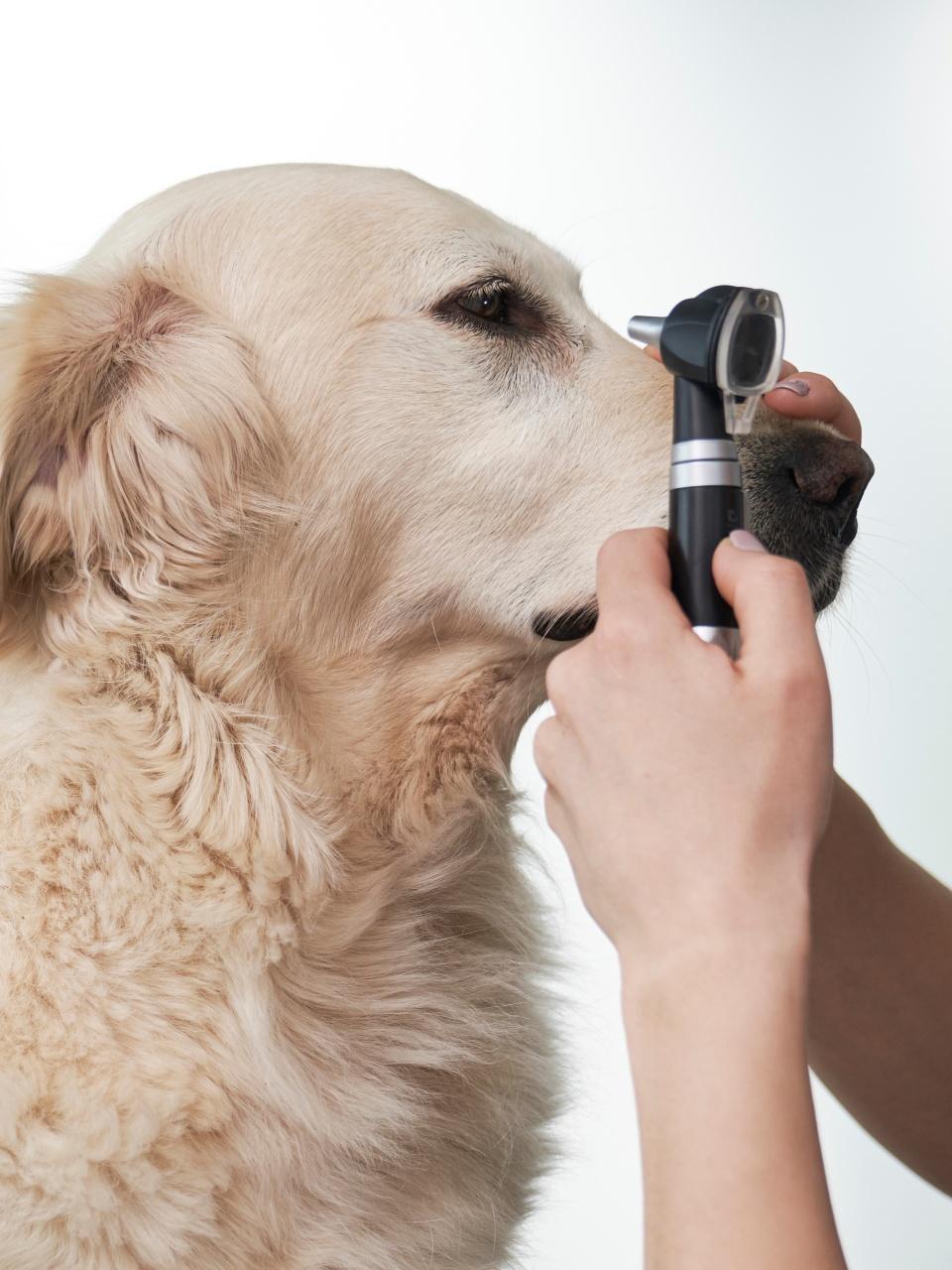
An eye exam may include a tear production test, corneal staining, pressure measurement and a detailed visualisation of the eye using a slit lamp.
A general vet is able to perform a wide range of eye tests to assess ocular health. They may refer your dog to a veterinary ophthalmologist (eye doctor) if they have more complex needs, or rarer disorders.
So, can dogs see at night? Dogs are very capable when it comes to seeing in low level lighting, yes. This is thanks to how they have evolved over time, resulting in anatomical features that enable light to enter the eye and be reflected off the mirror-like tapetum lucidum.
Although dog night vision is highly effective, they cannot see in complete darkness. Cats have somewhat better night vision than dogs, and both easily outperform us humans.
Be mindful that your pooch does need some light to be able to safely navigate the world around them, and it’s a good idea to leave a dim night light on for them if they sleep in another room.
Follow Us On
Check Out Our Most Popular Content