Your Cart is Empty


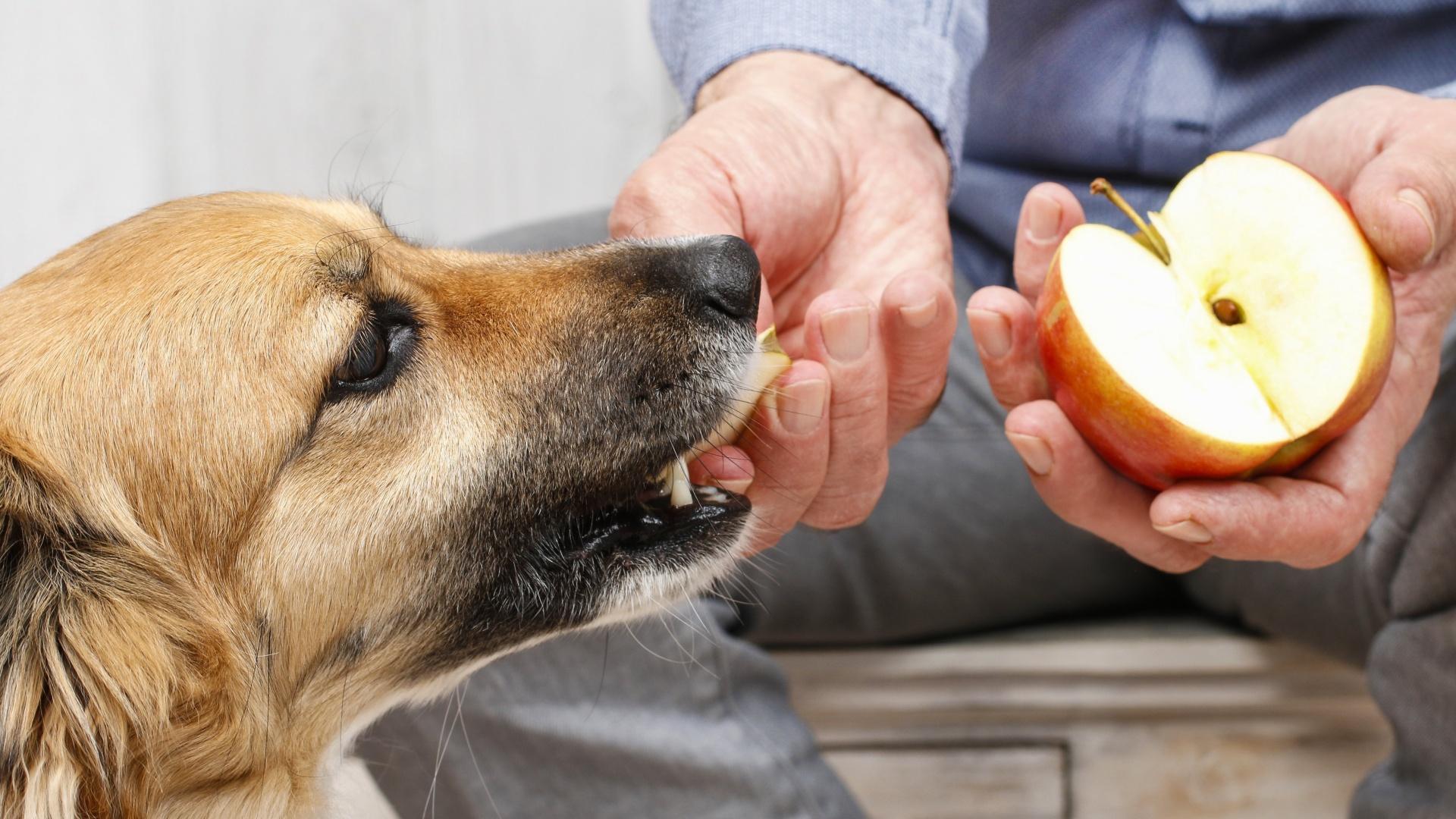
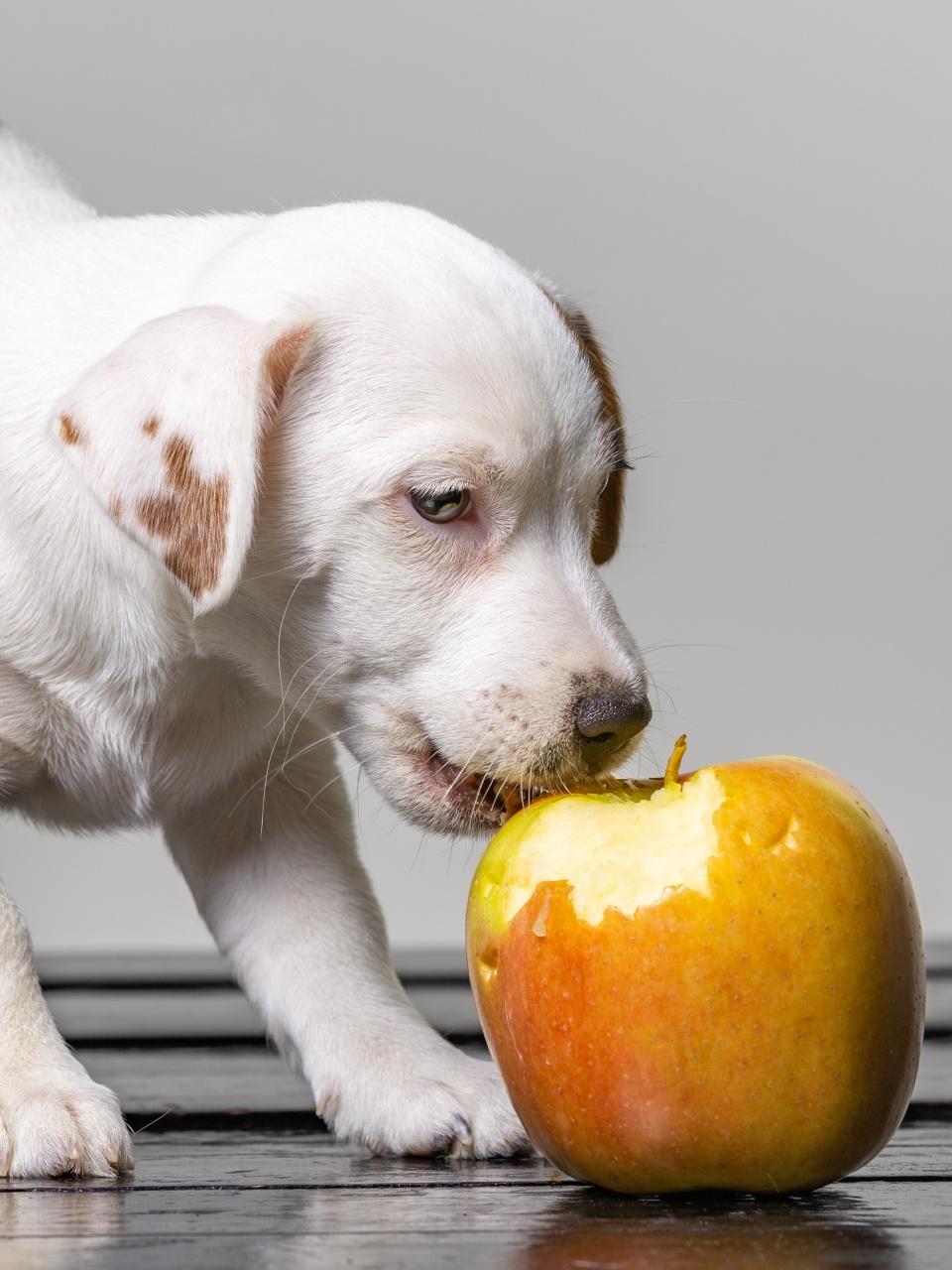
We all know that an apple a day keeps the doctor away, but what about the veterinarian? Many dogs enjoy munching on the occasional apple, but what are the pros and cons of this? Is it really okay to give Fido a munch of your Honeycrisp?
Apples are a non-toxic snack that are generally accepted as healthy for dogs to eat. They have nutritional benefits and can even be good for the teeth. At the same time, we have to be aware of the potential risk that the seeds pose, and the fact that too many apples can really upset the stomach.
If you do feed your dog apples from time to time, feel reassured that they’re likely reaping the benefits of this crisp and tasty snack. Read on to learn about how apples aren’t bad for dogs, and the safest way to feed them. We even dish up some great ideas for dog-safe recipes!
Apples are a non-toxic food and are safe to offer to dogs from time to time
This fruit is a good source of fiber, Vitamin C and antioxidants
Remove the core and seed and cut the apple up before serving, to prevent choking
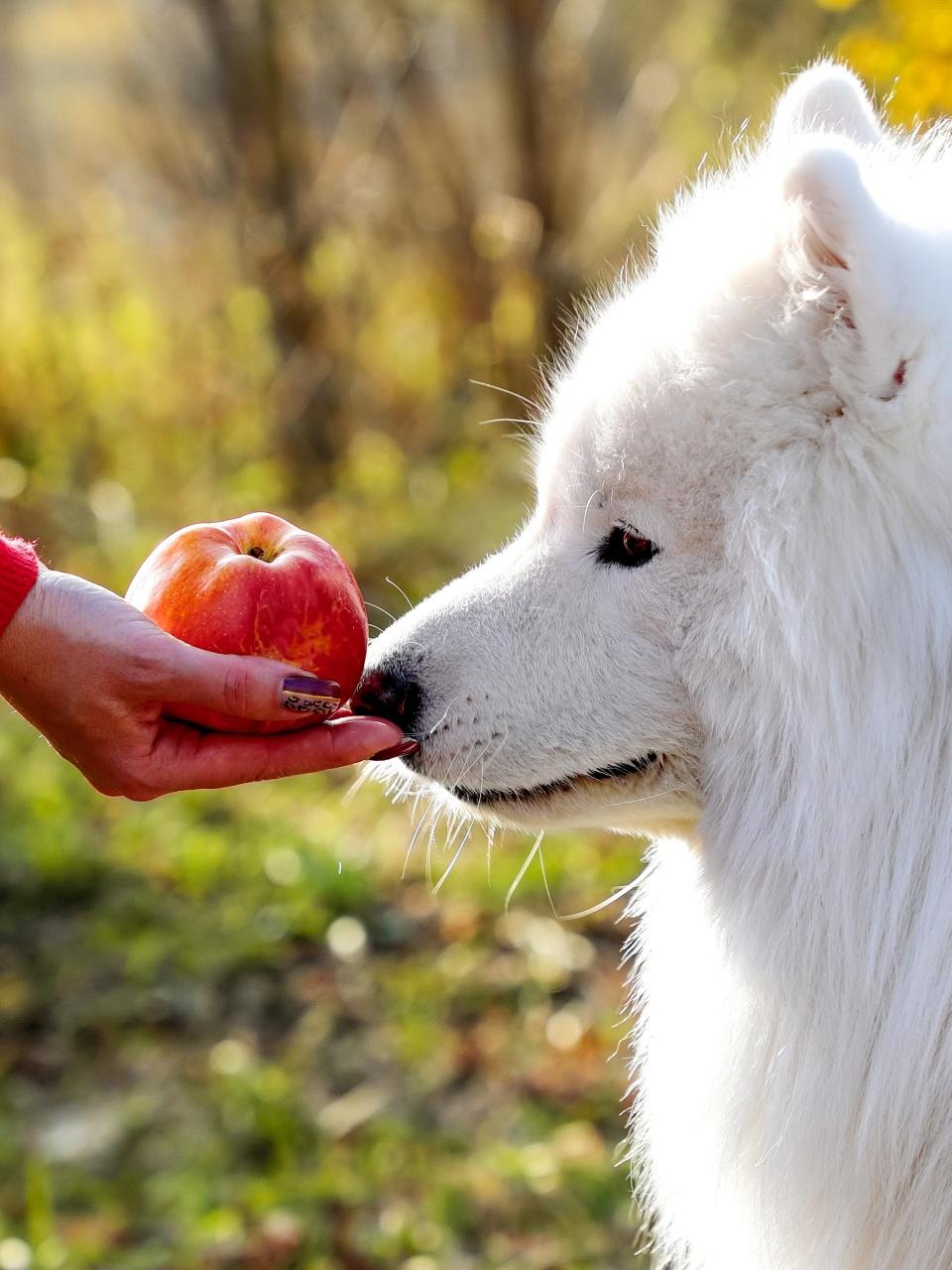
Yes, apples are a safe and delicious treat option. Whether you choose to give Honeycrisp, Gala, Granny Smith or Red Delicious, there is no wrong choice here. The skin and flesh are what you want to offer, while the core, seeds and stem can be cut away and discarded.
If your dog has had a negative reaction to apples before, it is best to steer clear of apples. While an intolerance or allergy would be very rare, if they make your dog unwell, it is best to avoid them.
TOP TIP: The first time you offer apples, try to ensure your dog has had no other new foods that day. Offer a very small amount and keep an eye out for signs of an allergic reaction over the next couple of days. This could include signs such as itching, runny stool, bloating, or red skin.
Apples are a real powerhouse of nutrients, not just for people, but for our canine companions too. They’re rich in Vitamins including A, C, and K and also contain lots of antioxidants.
Vitamins
Vitamin A supports low light vision and plays a role in skin health too. Vitamin C boosts the immune system, reduces inflammation and can also promote wound healing. Vitamin K plays a vital role in blood clotting.
Antioxidants
Antioxidants work to protect cells from damage. This promotes healthy again and can prevent the developemtn of a wide range of diseases and medical conditions.
Fiber and Calories
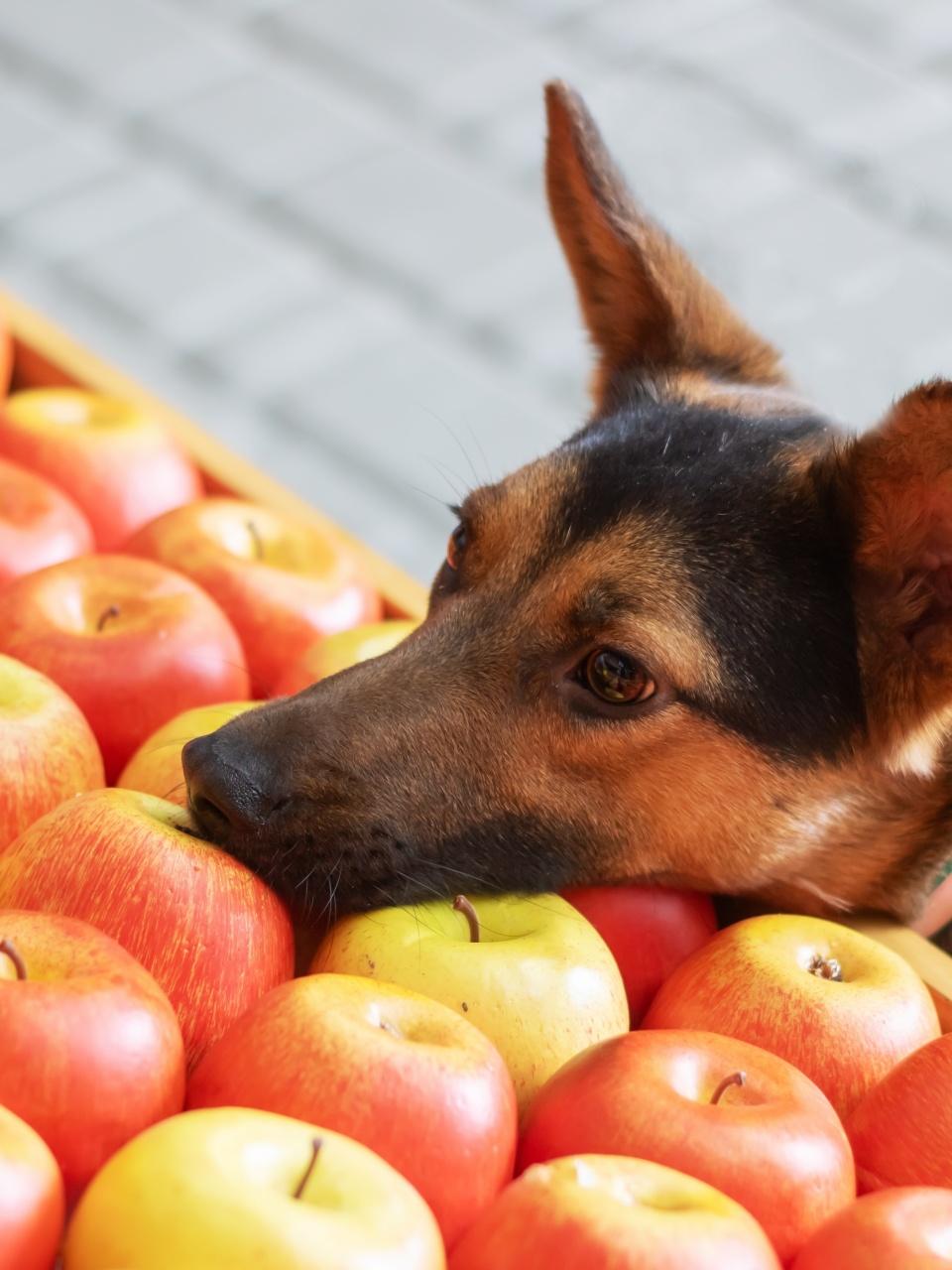
Apples are also a low calorie food, with the average-sized apple containing about 80 calories. They have around 2-3 g of fiber, which is great as a source of nutrients for the gut microbiome, and will also help to keep bowel movements firm and regular.
Nature’s Toothbrush
Another great advantage of the humble apple is its firm texture. When your dog chomps into a crunchy apple, it acts like a toothbrush of sorts- scraping plaque off teeth and even removing calculus.
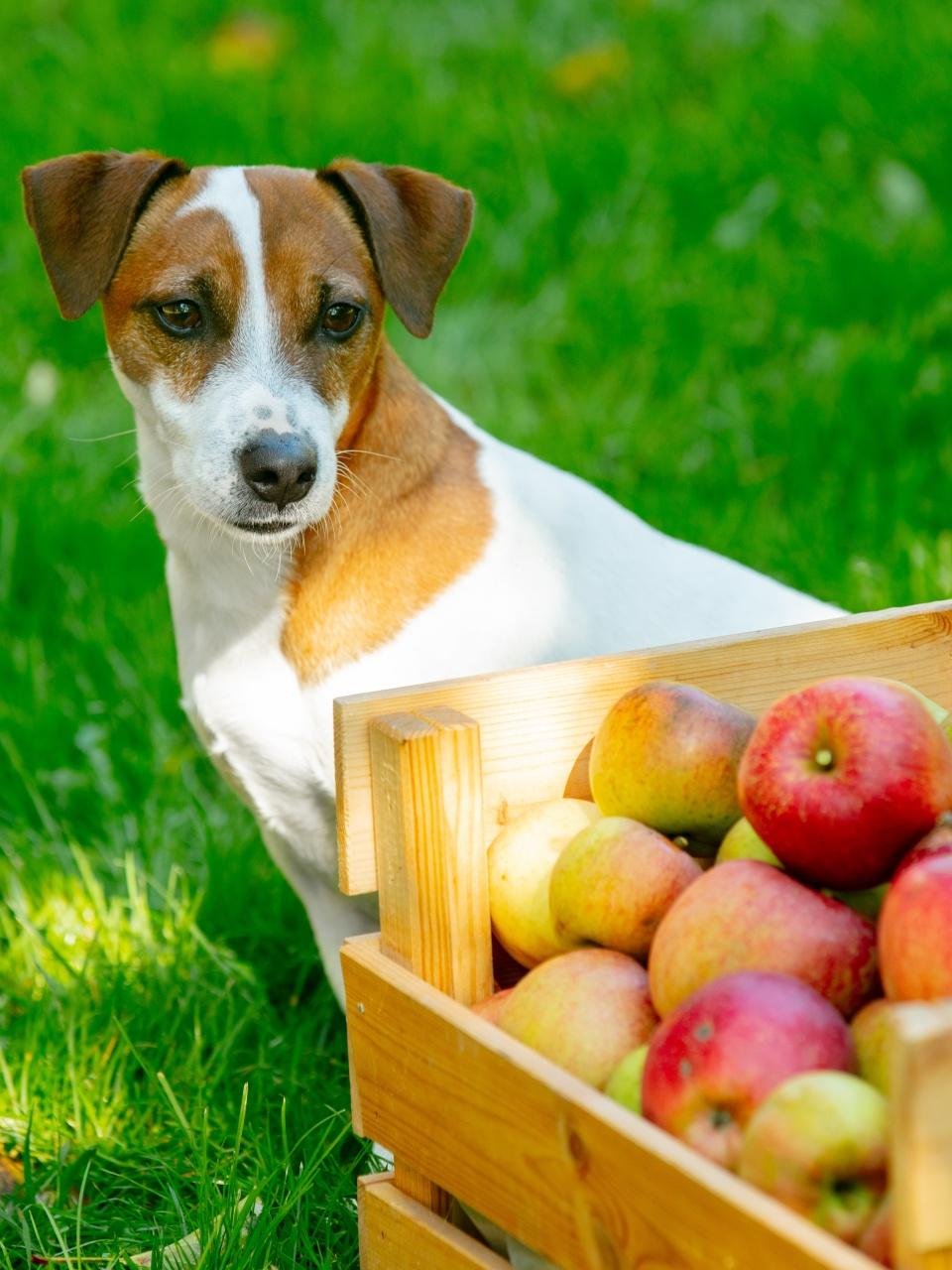
Apples are not bad for dogs as long as they are fed appropriately and in moderation. There are certain things owners should be aware of:
Cyanide. You may be aware that the seeds contain a small amount of cyanide in them. While much is written about this online, the chance of your dog actually eating enough apple seeds to cause cyanide toxicity is practically zero.
Sugar. Apples, like other fruit, are quite high in sugar. However, this is a natural form of sugar and it is not a problem to offer dogs fruit as a ‘sometimes’ treat. Dogs that are diabetic or over-weight should keep any fruit consumption to a minimum.
Choking hazard. If fed whole or in large chunks, hard apples have the potential to cause choking. This can be easily prevented by chopping them up.
So, how many apples should your dog be allowed to eat? Well, this is going to depend on their size, activity levels and age, among other factors.
Most vets will agree that treats should make up no more than 10% of the dog’s daily calories. Still, giving an apple a day is going to be excessive. We should vary treats to include things like higher protein options, like chicken, egg, and fish.


| Dog Size | Amount | Tips | Frequency |
|---|---|---|---|
| Toy (<10lbs | A small slice | Consider cutting skin off | 0-2 times a week |
| Small (10-20 lbs) | 2-3 slices | Keep slices thin | 0-2 times a week |
| Medium (20-50 lbs) | Half an apple | Always remove seeds | 0-3 times a week |
| Large | 1 apple | Chop up, even for very large dogs | 0-3 times a week |
| Giant (>75 lb) | 1 to 1.5 apples | Again, never serve a whole apple | 0-3 times a week |

As touched on above, apples would not be the snack of choice for every individual. As they are high in sugar, they should be avoided if the dog is over-weight or diabetic.
Your puppy can eat apples once they are old enough to eat treats, which is at about 12 weeks of age. You’ll want to stick to very thin slices or small cubes, and you may consider removing the skin for smaller breeds.
If your dog is on a prescribed diet for food allergies that is hydrolysed, they should not be offered any other foods. While apples are not a common allergen, any ingredient has the potential to be one.
Apples should always be washed, to remove any chemicals, wax or dirt. You can then peel it, but most dogs benefit from the roughage in the skin, so don’t feel like this is needed.
The easiest way to remove the core is with an apple corer tool, but it is also fine to just cut the flesh away from the core with a knife. The top of the knife can be used to pick out any rogue pips you spot.
Cut the apple into thin slices or cubes- whichever you prefer. Whatever option you plump for, try to keep the pieces small, eliminating any choking risk.
Apples are truly versatile. You can feed a sliced apple directly to your dog as a training treat, or sprinkle it as a topper on their food.
Still, sometimes your dog enjoys having an old favorite in a new way. This may mean making it into apple sauce and smearing it in a Kong or a lick mat. Or, the sauce can be put in the freezer and then offered as frozen cubes in the summer. These two options are great for keeping your dog occupied for longer periods of time and prolonged licking is a known stress reliever too.

One super apple recipe I have recently discovered is a yoghurt bite. You simply mix grated apple with yoghurt and freeze into cubes. These guys set in about 2-3 hours. It is best to stick to lactose free yoghurt, as most adult dogs are lactose intolerant.
Smear some apple slices with dog-friendly peanut butter that contains no added sugar, oil or xylitol.
Or how about my personal favourite, apple bakes? I’ll mix one egg, one over-ripe banana, 50g of flour and half a shredded apple to a bowl. Mix it into a batter and then bake in a small sheet pan or mini muffin tins until golden brown. And the best thing about these, is that they are yummy for us humans too!
Apple is now a common ingredient in many dog treats, as the market makes a nod to the health-conscious choices owners want to be making. This includes the likes of apple fish wraps from Fish4dogs, Riley’s organic dog biscuits, and Top Chews chicken and apple bites.
When purchasing store bought treats, it is important to always read the label. Try to avoid stick to more natural options with limited ingredients, and keep an eye on the carbohydrate content, ensuring it is not too high for your pooch.
Apples are just one of the yummy fruits that you can offer your dog. Some other nice options include bananas, berries, watermelon, or pear.
Bananas contain plenty of vitamin K and are really handy to pack along on a hike.
Berries are versatile and can be frozen for your dog to chew on and stay cool in the warmer months.
Chunks of watermelon are a delicious treat for your furry friend, and their high water content can help them maintain good hydration levels.
Pear is a bit like apples' softer cousin, and can be a nice substitute for dogs who have dental disease or who have recently had a dental procedure.
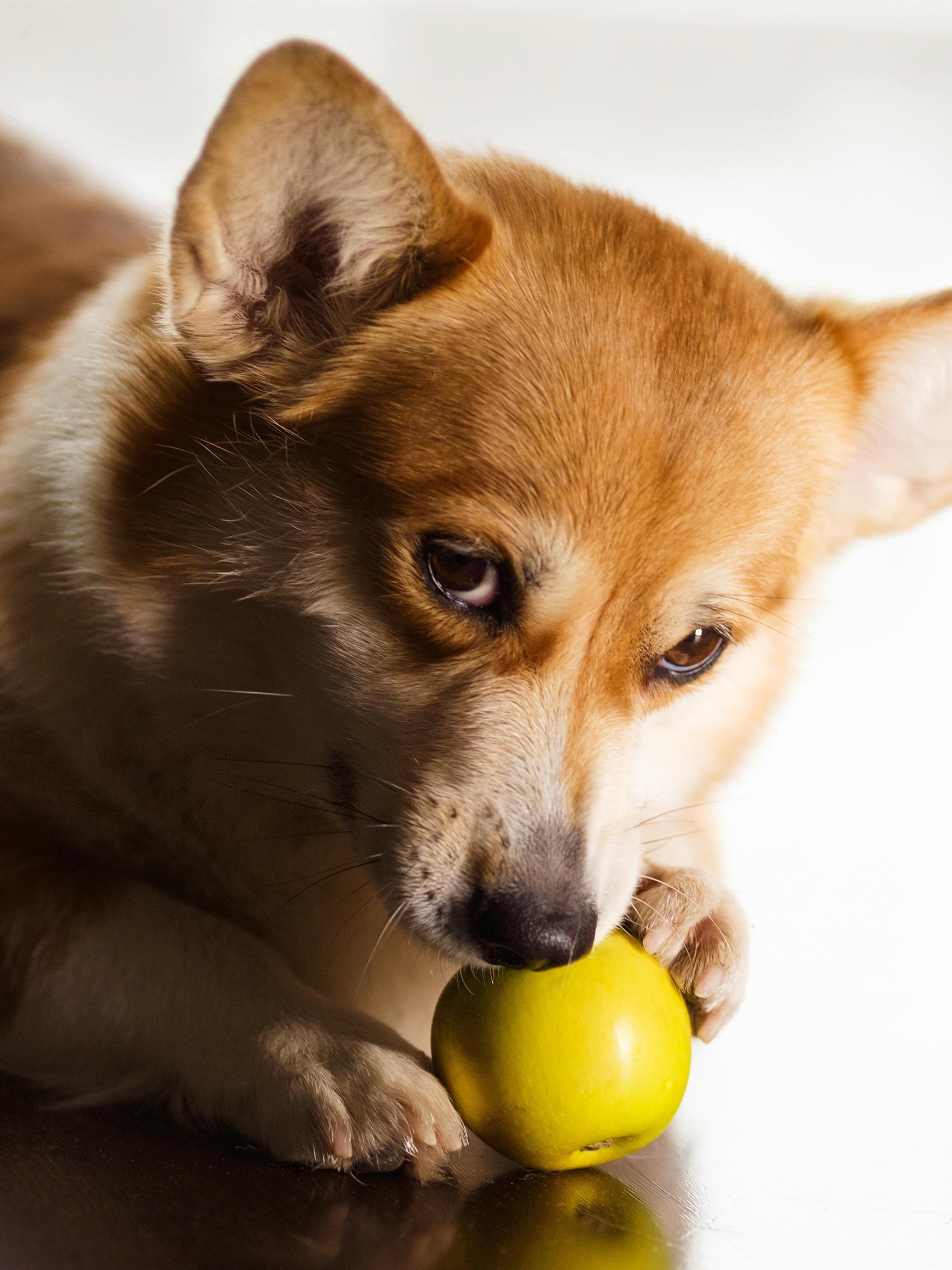
Can dogs eat green apples?
Green apples are a perfect option for your pooch. Green apples contain a little more fiber and a little less sugar than red ones, but experts think that red apples provide slightly more antioxidants.
Can dogs eat apple cores?
No, you do not want to be offering the core to your dog. The core contains the seeds, which are to be avoided. It is also harder to chew, so could lead to a choking event.
If your dog eats an apple core, they should be absolutely fine and there is no need to be concerned. The core is not inherently harmful, it is just advised to try and avoid them, given their texture and as they contain the seeds.
Can dogs eat apple skin?
Absolutely, skin is where most of the fiber is and is a really healthy part of the apple. If possible, stick to organic apples, to ensure there is minimal chemical residue on the skin.
Can dogs eat applesauce?
Home made apple sauce is fine, but high in sugar, so stick to tiny amounts. Store bought apple sauce typically contains added ingredients- some of which (like xylitol) are toxic.
Can dogs eat apple seeds?
Apple seeds contain a chemical called amygdalin, which can be converted to cyanide in the dog’s digestive tract. For this reason, they should always be avoided.
Eating just a few seeds could never cause toxicity, they would need to be eaten in vast quantities.
What if my dog ate too much apple?
If your dog has really overdone it, there is the potential for stomach upset. Some common signs would include vomiting, diarrhoea and abdominal bloating. If your dog seems very unwell, do not hesitate to contact your vet for advice.
Thankfully, apples are not toxic, and even if lots is eaten, your dog will be back to normal very soon.
Follow Us On
Check Out Our Most Popular Content